When are organisational values of no value?

When they bear absolutely no relation to the business they are meant to be representing.

I feel a bit mean having a go at a donut company when I have genuinely never tried one of their products, but their mission and vision are so far from any from of reality that I have to pick up on it.

I was with a colleague dropping a hire car back to Hertz in Lexington, Kentucky early in the morning and as they didn’t have a public toilet, went into the Krispy Kreme next door.

There were a few couples and individuals in there eating donuts for breakfast and a mini production line producing and adding toppings to the standard looking donut. It had a horrible air of grubbiness and smelt like the inside of a fryer.

It touched my life but not in a good way. It definitely didn’t enhance it, other than make me laugh out loud when I read this proud statement on the wall,

Here it is in all of its glory.
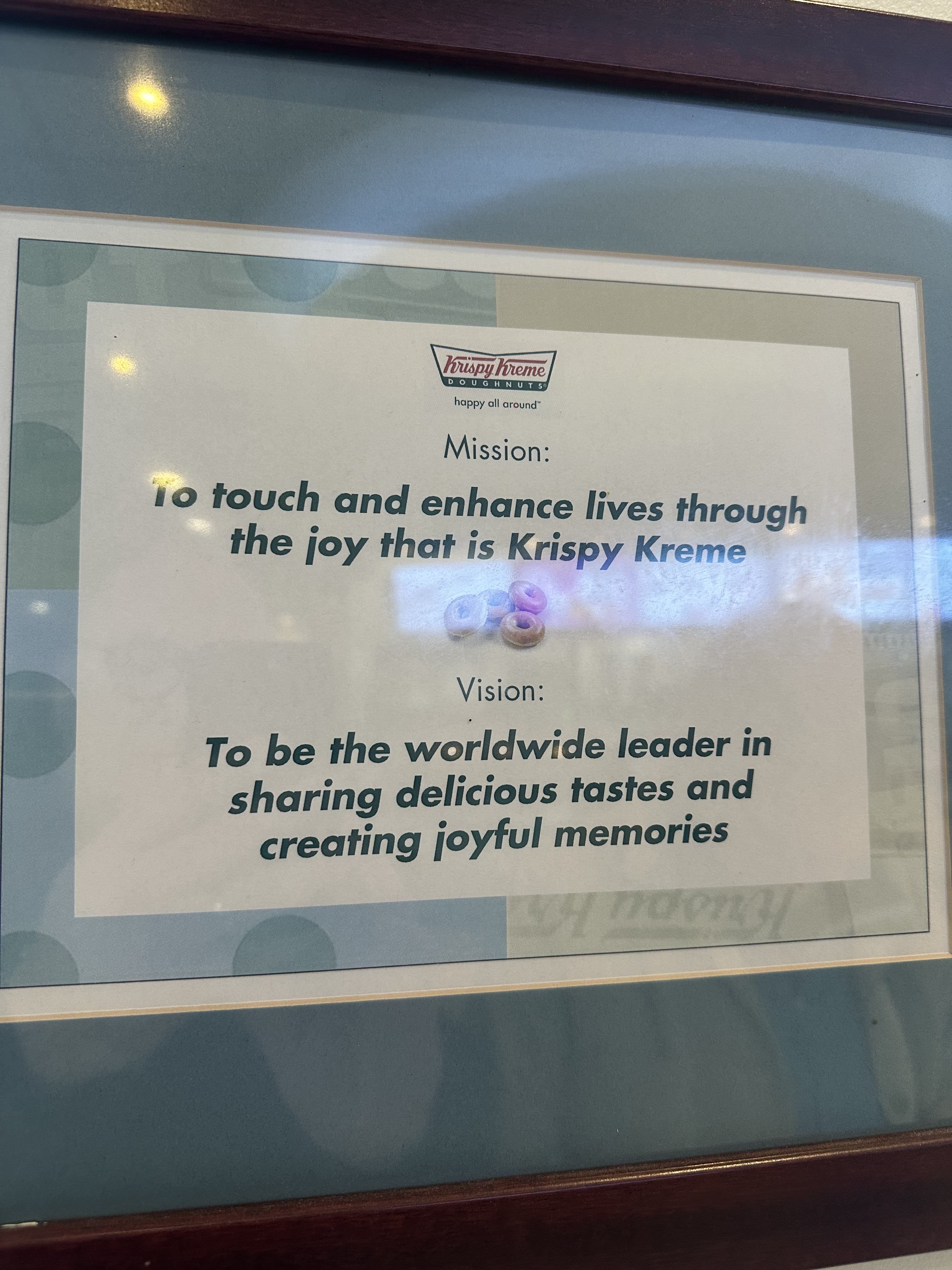
Mission

To touch and enhance lives through the joy that is Krispy Kreme.

I’m not sure what to say about this other than it is clearly ridiculous. If you ate this for breakfast regularly you would die younger than you would if you didn’t eat it.

That’s touching lives but not enhancing them, unless you call a shortening of your life an enhancement? Maybe it is as it gets you away from eating this for any longer than necessary?

Vision

To be the worldwide leader in sharing delicious tastes and creating joyful memories.

This is the easily the most ridiculous statement I’ve ever seen for a company vision.

If anyone can honestly say any of their top say, 100 joyful life memories is eating a donut in a strip mall that smells of cooking fat, then I’d say they maybe need to question some of their life choices.

I’m sure a donut can be a great treat and these may well be good donuts. Maybe even better than a homemade, more natural one such as the ones made by Doughnotts.

But I doubt it.

Donuts are staples in theme parks as they are the epitome of treat snacks which give you a sugary rush and the operators very high margins on every one they sell. it’s all about the context.

But if they become staples for breakfast and you feel any form of long-term joy about that particular life enhancement, I’d suggest you need to seek help, and welcome the onset of diabetes with open arms.

Their vision needs to be more along the lines of creating amazing tastes and flavours and bringing smiles to peoples faces when they enjoy them with friends.

Perhaps their vision needs to be to deliver that experience worldwide, in places that people are having fun together.

In the UK, Krispy Kreme, in all of their ultra processed glory, are in lots of motorway services. Who knows how long they have sat there festering in their plastic boxes? In the USA, it appears they prefer strip malls as outlets.

Neither of those are particularly inspiring or desirable locations, and as such, the current mission and vision are missing reality by a country mile.
Why Tesla need Apple and Apple need Tesla

Tesla are losing money at an incredible rate. According to The Verge, they lost around $785 million in the first quarter of 2018 and are down to cash reserves of only $2.7 billion, after starting the year with $3.4 billion. If they carry on at this burn rate they will run out of cash and have to file for protection by the close of 2018.

Apple, on the other hand, are making money like it’s going out of fashion. In the last quarter of 2017 they made a profit of $20.1 billion. This leaves them in a position where they have retained profits of $91.9 billion.

But when did Apple last create anything that was truly disruptive? The iPod, the iPhone? maybe the Apple TV?

All of their recent lunches have been derivations, not innovations.

Their launches over the last number of years have been dull to say the least. But there’s little doubt they design some of the most sought-after products in the world that carry an incredible premium price.

On the surface this is similar to the Tesla.

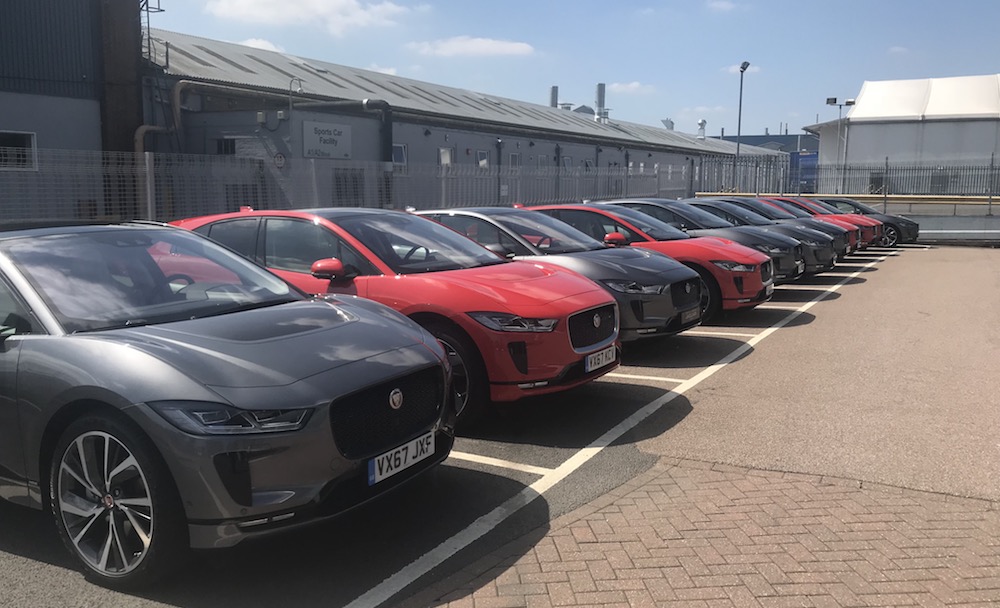
It was a disruptor in the passenger car market and their Semi is sure to disrupt the market for Heavy Goods Vehicles. If you’ve ever driven a Tesla, it’s hard to argue that they are anything other than quick, but their fit and finish is poor. It’s nowhere near as good as the products coming in from the German manufacturers Audi and Mercedes and a long way behind the British designed Jaguar iPace – All of which will match the Tesla for range in the next few years.

The Jaguar iPace at the Electric Innovation Centre in West Bromwich UK

When these products hit the mainstream market, they will have a serious impact on Tesla sales. The competitors’ products just look and feel better. The one area Tesla continue to lead is in their battery technology – which for me as an iPhone owner, is another serious Apple weakness.

So Tesla need design input, they also need cash – desperately if they want to continue to compete. The interior of the Tesla is just plain bland and for me, cars like the Model X are different, but ugly and overcomplicated. The gull-wing doors are schoolboy stuff, designed by someone with a Countach poster on their wall as a kid. For me, they have no place in the real world.

Apple need to advance their battery technology and look for an outlet for their cash that is going to give their shareholders a long-term return. We know Apple are working on a car, it’s been leaked all over the place. When Apple do eventually launch, are they really going to be satisfied with the standard charging system available to everyone else?

The answer has to be no.

They even had to design their own charging plug and headphone socket for their phones!

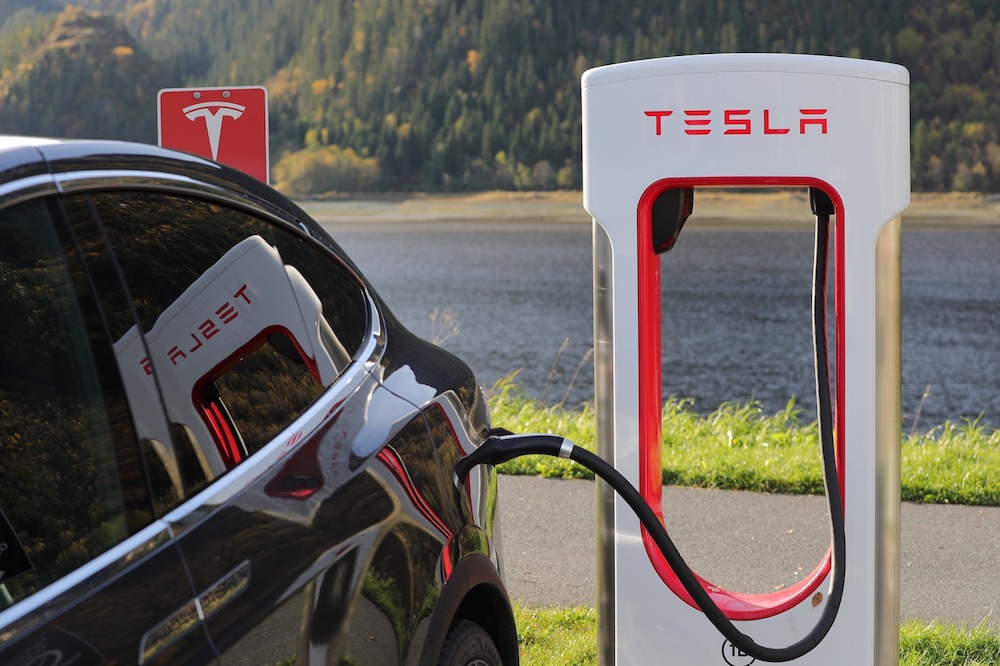
The Tesla charging network is already worldwide and can deliver charge at exceptional rates.

Tesla Model S recharging

We know that Dyson, who have some of the most advanced motor technology, are working hard to produce a car too. Autocar have produced their own drawing of what this may look like here. It’s quite cool and they could again come in as another disruptor to the car market.

Dyson car by Autocar

So for me, Apple and Tesla throwing their technology and design together will be the perfect match. Working together with Apple’s cash, will leave them both in a considerably stronger position than the sum of the parts.

I’m not sure which of the stocks to advise investing in, but maybe wait until Tesla tanks a little further and then swoop in, as if Apple come to town with the Tesla, it is going to be a world beater and every major car manufacturer needs to take note.

They are two brands that have made their name for innovation. Their brand values overlap in almost every way and there doesn’t seem to be anything that would stop them working together apart from some bloody-mindedness from Apple because the existing Tesla model range wasn’t their initial concept. To me though, it seems like their innovation and their organisational culture – such as single-minded strong leader, obsession with detail, being a massive disrupter in new markets – are completely complementary and both need each other to grow to the next level.

So, watch this space. It’s going to happen.

Wanting for nothing and why brands have a crisis coming

Brands have got a real problem coming. It’s also going to have a huge effect on some of the biggest economies around the world too.

We all have enough stuff.

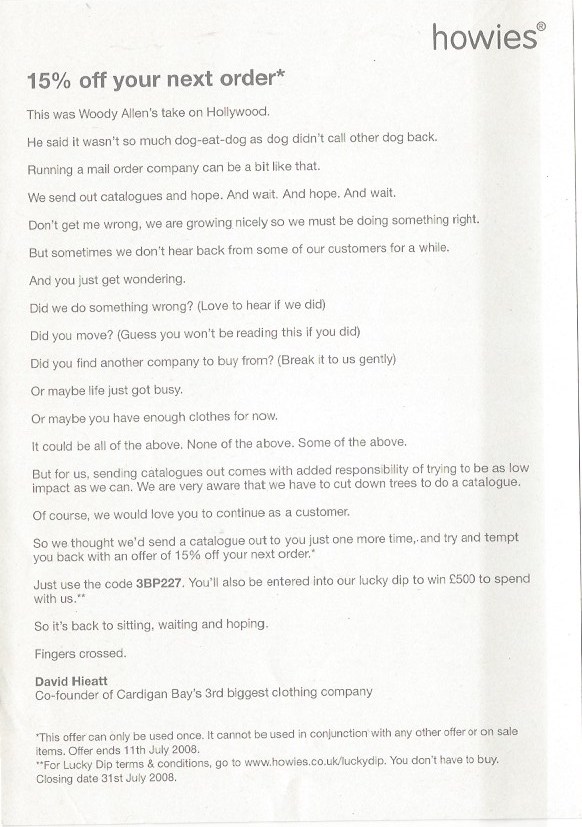
Back in Spring 2008, my favourite brand Howies sent a card inside my quarterly catalogue asking if I’d fallen out of love with them, or maybe whether I just have enough clothes for the time being. It has been something that has stayed front of mind for nearly ten years now as I think we are at a stage where we probably all have enough stuff.

I just have enough stuff thanks

I have a newish computer, my car is fine (even with 130,000 miles on the clock) and I have quite a few watches. My Phone is reasonably recent and I really don’t need an Apple Watch, a new TV or another bluetooth speaker. In fact we have TV’s all over the place, bluetooth speakers all over the place and a lovely old valve amp for playing proper music.

I have outerwear coming out of my wazoo, at least six pairs of jeans, two gilets, jumpers, shorts, socks and shirts in every material for every eventuality.

I have access to almost every song ever produced with Spotify and every film ever made, with a combination of Amazon Prime, Netflix and a mildly chipped Firestick.

I adore Oxford United and should make more effort to see them home and away. That’s tribal, it isn’t about the brand. This is an opportunity for tribal experiences like football and they will be one of the few areas to do well out of this.

I love holidays, exploring new places and going to the pub. In fact, probably my favourite thing to do is walk to the pub with the dog, have a few pints and walk home again.

But in effect, I want for nothing.

Which is the problem that any brand faces.

We all have too much stuff.

There is no consumer good that creates real desire, real anticipation and a real need to have it in your hands.

New products are all derivations. Small but barely discernible differences that the brands create to try and make us want them. But the differences aren’t real enough. They don’t add value to our lives and as such, they just become normal, within a moment of owning them.

Social media makes things worse. You can now see that everyone owns everything and we are all bored of this. It’s why so many people are turning away from Facebook and it’s dying on its arse. No-one lives that perfect a life and we can all see through it for what it is.

Showing off.

But if everyone has everything anyway, who is there to show off to and what with?

It’s also why everyone needs to pay less than full price for anything. Why else do you think the outlet villages and discount sites are so prevalent? The only thing left to give you a buzz is the bargain, rather than the brand you’ve bought.

So what do brands do to overcome this?

The answer is to fulfill something deeper than a need to own something. My clever friend Leila pointed out that this is why there’s a huge rise in Mindfulness and Wellness. We are all searching for something more than just the diminishing thrill of owning things. I know with the challenges I’ve been through in the last year, I couldn’t care less about material things, I’m quite pleased to be vertical and pretty much pain-free again.

That’s one hell of a challenge and one thing I can say is that not all brands will survive this imminent crisis.

You can summarise it all very easily in just one line.

If there is no actual need, then the only way to sell is by creating desire.

maybe that is what marketing is all about. Creating desire. The issue I have is that we are all losing our desire for material things and therefore selling anything material is just going to get harder and harder.

It’s a self-imposed austerity that could run for quite a while. With an economy built entirely on buying such things and a Chinese economy built on making these things, I suspect things are going to get a little rocky in the manufacturing-based economies.

LogoJoy Artificial Intelligence Logo design review

Creating a logo with artificial intelligence

I ran a brand consultancy for well over 20 years and as a team, we created literally thousands of logos and quite a few brands that you would know. The logo is one element of the branding, but it’s one that is easy to spend a fortune on without getting something you are totally happy with.

Design is a completely subjective thing and one person’s great is another person’s awful. So, only you can decide whether you like a logo or not. The great thing about this Artificial Intelligence design tool which is called LogoJoy is that you can create as many versions of a logo as you like, without having to pay. I have given LogoJoy a full review over here complete with plenty of examples of it in action.

Here’s a film to show you how to do it for yourself. You can honestly create a great logo in under ten minutes.

So that’s it. It’s dead simple and anyone can use this to create a great logo. With the artificial intelligence behind the system, it genuinely learns what you like and the more you use it, the more close it gets to something you’ll love straight away.

Create your own logo for free for yourself here

One thing I do mention in the film is the difference between pop songs and album tracks. When you have created a few options I would always advise you print them out and stick them on the wall. Don’t make an immediate decision. The one to choose is the one that grows on you and that isn’t always the one you love immediately.

How to get Organic Stars in natural search results

Organic Stars in search results were outlawed for many years by Google as there were too many people ‘gaming’ the system and using results from all of their products and pushing them against every product they own individually.  This is still obviously outlawed and if you do it, you will get a Google penalty.

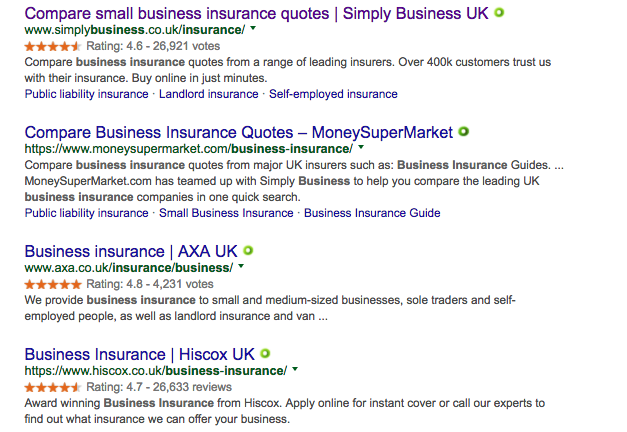
But the good news is that there is now a super simple way to get Organic stars in your SERPS, just by adding your aggregate rating wrapped up in a simple Organization schema. They can improve CTR by a huge percentage, so for so little effort, there’s very little else that delivers more for your buck. This is what they look like when they are delivering.


How to get organic stars in SERPS
This is what organic stars look like in SERPS

The Schema is simple and as follows:

Blank Home page schema for Organic stars
Blank Home page schema for Organic stars – Just click the image to get the code in a word.docx

At present, you do need a reviews provider to give you these scores, but it may be possible to gain them from Google’s own rating if you can deliver a dynamic link into the Google page with your aggregate rating.

It is important to note that when you add it to your page, it’s worth testing it through Google’s own Structured data tester  to ensure you have the code exactly right. It’s also CRITICAL to note that if you miss any of the elements off above, it may well pass, but you do need ALL of these elements to gain stars.

So it’s that simple. Add it to your home page, wait a week or so and you should get stars. I have used this many hundreds of times and it works every time!

Good luck, and please feel free to post examples of stars in the comments when they arrive on your site.

WH Smith Munch – A brand with fake values is a brand that is destined to fail

I was at east Midlands Airport recently and they have something of a captive market for their meal deals with both Superdrug and WH smith offering meal deals for £3.99. On the surface this looks like great value.

WH Smith is a brand that started 224 years ago in 1792 in London and has 1,351 outlets with 615 on the high street and 736 travel outlets in airports and stations. It turned over nearly £1.2 BILLION in 2015 and employs 14,500 people.

So with all of these years of experience, heritage and the sheer number of interested parties, you’d think they would understand the concept of authentic brand values. Built on this history and surviving the worst of the high street recessions they really ought to know better.

But they don’t. They have an own brand product in store called ‘Munch’ which is entirely fake.

WH Smith Munch Sandwich a brand with totally fake values

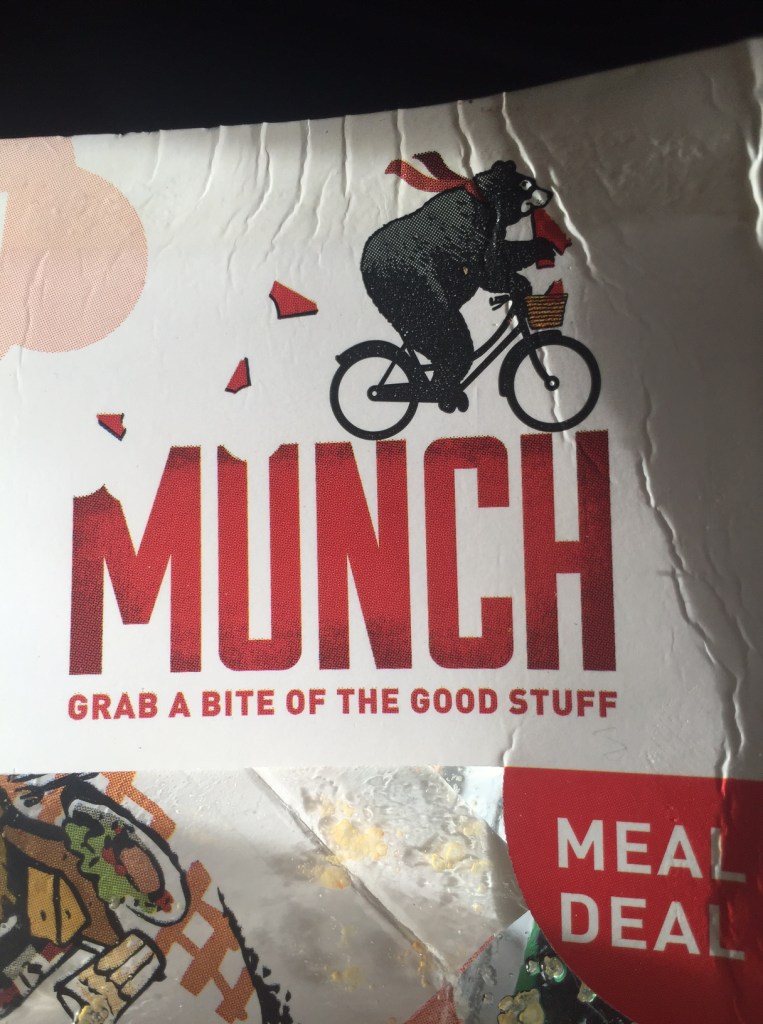
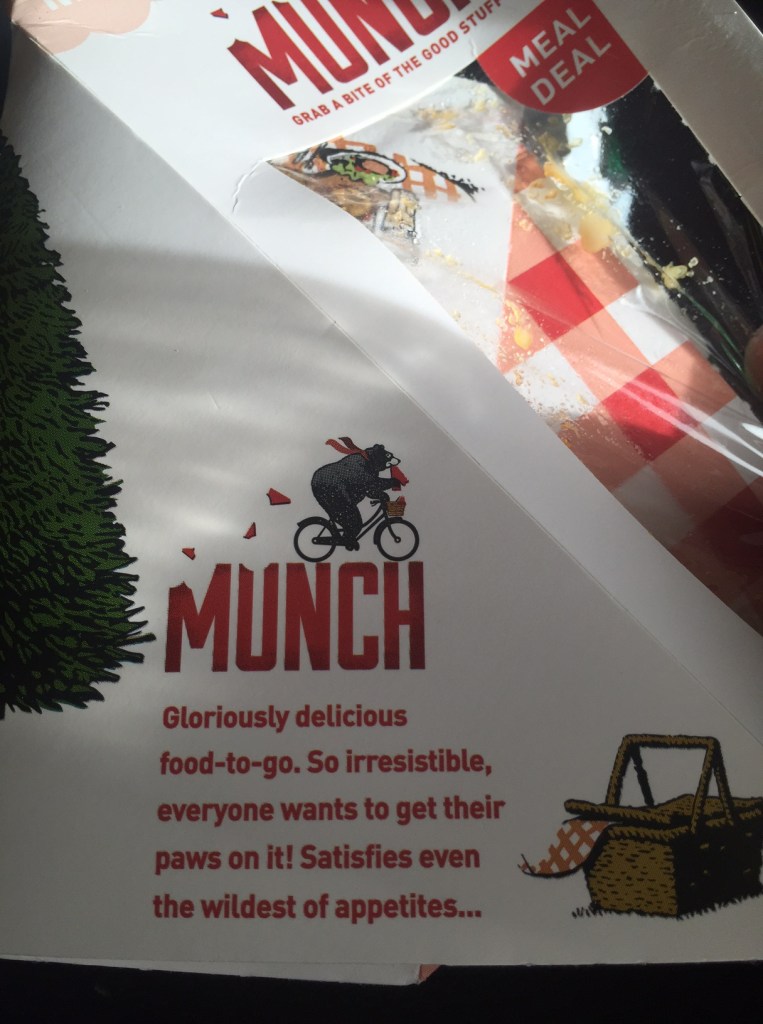
Munch, which is a range of sandwiches and wraps, tells you you can ‘Grab a bite of the good stuff’. A pretty compelling proposition for food on the go. They back this up with a brand support statement that says ‘Gloriously delicious food-to-go. So irresistible everyone wants to get their paws on it! Satisfies even the wildest of appetites…’

WH Smith Munch Sandwiches with a brand statement that is totally fabricated

But the sandwich was disgusting. I didn’t want more, I never want to eat it again, I never want to eat anything for sale in WH Smith. I didn’t even want to finish the sandwich. Eating it, made me feel ill and dirty. Eggshell in the egg mayo didn’t help and even the bread was stale and unnatural. So I had to have look at the ingredients.

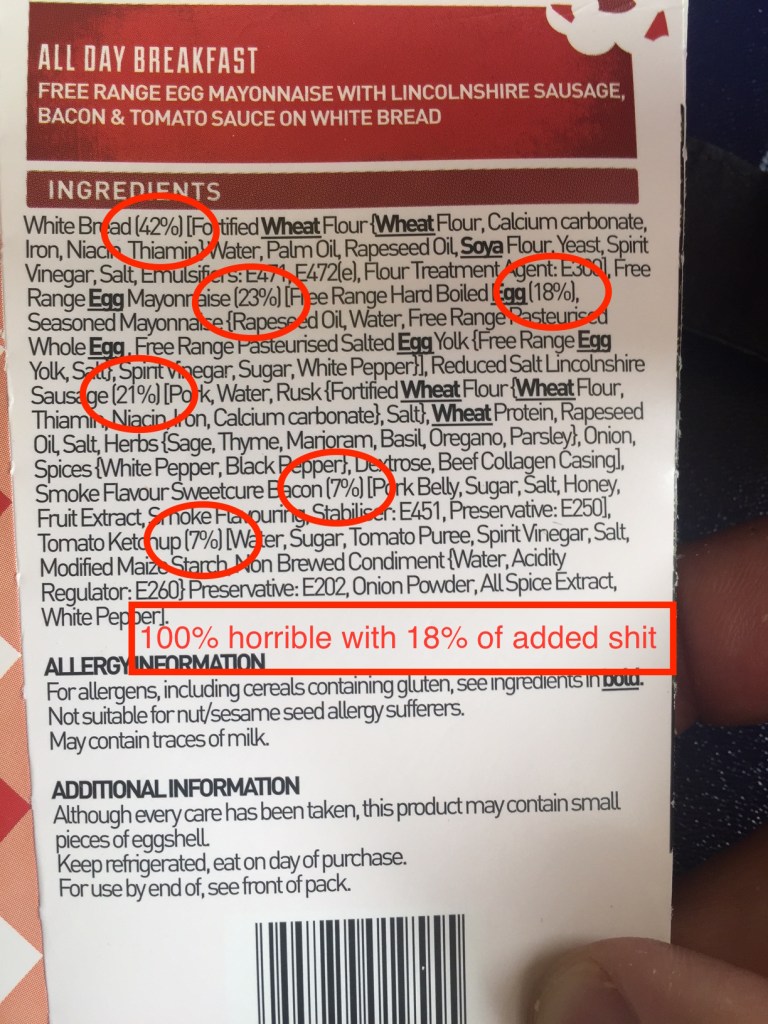
This was a total shock. I was genuinely horrified with what it contained and it bore no relation to the brand values all over the packaging whatsoever.

WH Smith Munch Sandwich - The ingredients 100% horrible with an added of 18% of total shit
WH Smith Munch Sandwich – The ingredients 100% horrible with an added of 18% of total shit

Even trying to ignore the fact that claimed ingredients added up to 118% (It must be all the shit they have piled in to make it taste less natural and healthy) the list was not all all irresistible. In fact it was entirely resistible.

I won’t be eating ‘Munch’ again. I’d suspect that if this is how WH Smith run their business, they are in trouble. I’ve talked about Tesco in the past and the start of their problems being with the quality of their products, which all came true. Any brand that says one things and delivers another like Abercrombie and Fitch will be found out soon enough. WH Smith are that brand.

I’m no whistle blower, but if I had any money invested in WH Smith, I’d get it out fast. This is a brand heading for the gutter.

Is Google playing fair with competitors search results?

I’m not going to say much here, so I’ll let you decide for yourself. I have talked about Google and their monopolistic power previously. Google is still totally dominant in the global search market. You’ll see from this graphic below that they have 67.78% of total search share compared to the next biggest Bing with only 13.27%. That’s over five times the share. In the Uk, this is 86.6% for Google and only 8.88% for Bing, which is over ten fold.

Share of search market April 2016

So you would expect that their results would be completely above reproach wouldn’t you? They’d play fair as they are in such an obvious monopolistic position right?

Wrong.

I wanted to understand how seller ratings worked in Bing. Were they any different to those in Google? Was there anything else I needed to know?

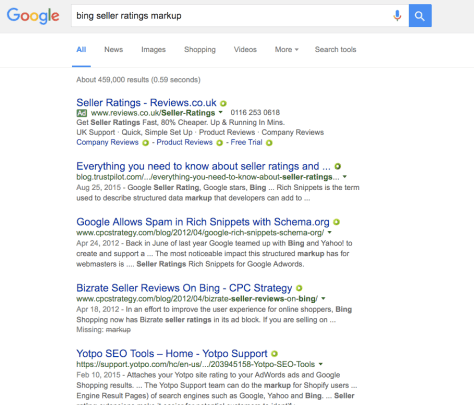
So an obvious search term produced the following results in Google with no sign of Bing on the whole of the first page.

Bing Seller ratings search results in Google

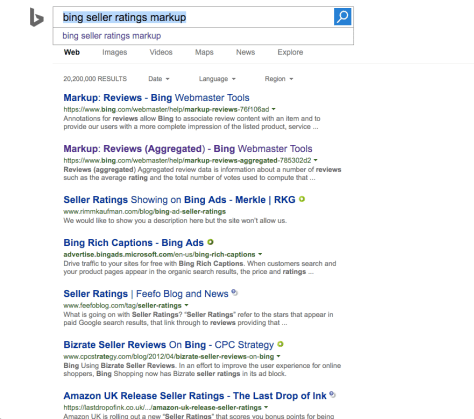
And in Bing, quite different results here with their own two useful articles in first and second place as you’d expect.

Bing Seller ratings search results in Bing

So based on my search intention of trying to find more information about ‘Bing Seller ratings markup’, which produced the most useful results?

This does look remarkably like a playing field that is not at all level. Naughty Google.

Since I wrote this earlier today, Google have been all over BBC news for their alleged abuse of power with Android too.


Why we need British Steel

British-Steel-logo
British Steel logo

British Steel first appeared in 1967 which was formed out of the nationalised British Steel Corporation (BSC). It went on to be privatised and launched as British Steel plc in 1988. It was even big enough to be part of the FTSE 100 Index. In 1999 the company merged with Koninklijke Hoogovens to form Corus Group  and even then, many of us thought it was a mistake and would start the end of the steel industry in Britain. It’s easy with hindsight, but it looks like that was right.

Corus-logo
Corus logo

And it’s why we need British Steel again. Quality, traceable, home manufactured fabulous, british steel.  It may not have been a glamorous brand, but it was one we knew and understood.

I shared a tweet the other day by a man called Dick who pointed out the following “The argument for Trident is that it costs £120bn and saves 600 jobs. The argument against Steel is that it costs £1.5bn and saves 15,000 jobs”

There is a new standard in Europe called BS/EN 1090 and what it says is that EVERYTHING, right down to welding rods has to be traceable back to source. No traceability, no CE Mark. This is currently impossible with imported steel as there is no way of knowing where it came from. If you don’t know how it was made, where it was made or what it was made with, then how can you guarantee it is safe? For an insurer, how can they assess that risk?

So for me, bringing back British Steel would be a huge step forward.

So maybe this is just too obvious to be useful but if we are about to lose our steel industry and 15,000 jobs anyway, then surely it must be worth investing in this industry again.

We poured billions into our banks to save face more than to save jobs and now it must be time for this support to turn to one of our core industries. Steel.

Even taking the finances alone. 15,000 families will be immediately having to draw benefits for some considerable time. Let’s say an average of three years. Then by my maths that’s at least £1bn million over this period and ongoing devastation to communities that just don’t need more bad news.

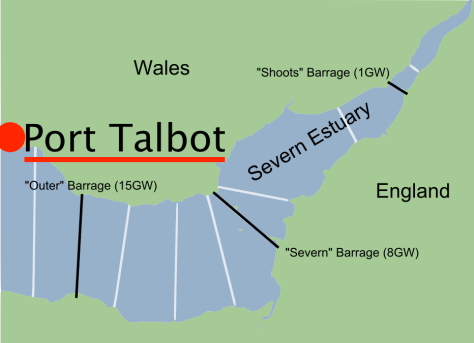
If you take Port Talbot as a case, then maybe energy is the issue? This can be solved with the Severn Barrage. Every aluminium producer in the world seems to use Hydro Power to smelt  aluminium, so why not clean steel up at the same time and make it go green. That’s a bargain at between £10-34bn – which makes the saving of steel look positively cheap.

Severn-Barrages-map
Severn Barrages map

British Steel is Britain through and through. It’s literally what our country was built with and by my very simple way of thinking, something our government should not just support but make it a model of how decent targeted intervention can help rebuild Britain from our proud industrial heritage outwards.