I am in no way sure that I understand the point of this demo at all, but it’s very clever technology and the biggest companies in the world are starting to experiment with it.
Why not have a look at the GE page and try it for yourself. I did and it is amazing. Print the grid out here and then open the browser here. You’ll need to allow it to access your webcam. For me it worked perfectly in Firefox, but wouldn’t fire up in safari.
My very own GE wind farm created in my very own office - amazing
If the likes of GE are finding ways to embrace the power that is coming from augmented reality, I say again, as I did here and here, you’d better start thinking about how it fits into your brand.
I saw this article on Mich Slack’s blog yesterday and had to add it to my own stuff. It is a truly amazing short video that will scare the living daylights out of you if you think that social media is a fad.
One highlight for me is this:
Radio took 38 years to get to 50 million users
TV took 13 years to get to 50 million users
The Internet took only 4 years to get to 50 million users
and the iPod took even less time at only 3 years to get to the magical figure of 50 million users
Facebook reached 100 million users in 9 months and now growing at over 600,000 users per day. It now has over 300 million users.
Watch it and weep if Social media isn’t already central to your brand planning.
Even further on than this, Google is becoming too slow as it isn’t real time whilst Trendwatching are predicting that ‘Nowism’ is our new future. Read their own amazing download here and then subscribe to get it every single month.
The constant reassurance that for the cusomer, their choice of brand makes them feel good all about their purchase decision all the time. It’s a partnership that each party benefits from. Out of this, trust grows and a for the brand owner, a long term relationship hopefully ensues.
If you lose your customers trust, then you lose them. Maybe not immediately, but you certainly undermine their love for you. Big style.
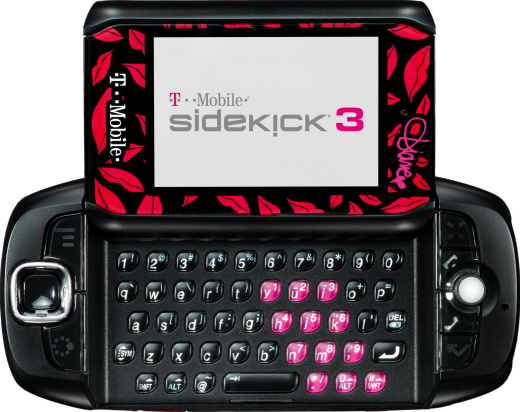
So that’s why T-Mobile losing ALL of the data for their Sidekick customers is such a disaster for their brand.
The Sidekick phone, great for the youth market, but perhaps a total disaster for T-Mobile
Sidekicks are a much sought after range of phones, that are more akin to mini computers with their keyboard and high end functionality. They are available in the UK, but only hacked ones that have been bought in on the grey market. To me, they are a strong a compeitior for the youth market than the iPhone as they deliver what youth want, ot what fat business people like myself want. In effect, if I like it, they’ve failed.
In this article by Endgadget, they go into more detail, but its no surprise to a committed Mac user like myself, to discover that the issue is a back end server problem supplied by Microsoft.
At the same time, this article by PC World also shows that us Mac geeks are becoming a bit rarer (and a bit richer)
It seems that 36% of Mac owning families earn over $100k but that figure is only 21% for PC only families. So apple have bagged the top end of the market, which is a good place to be for any brand. They must not take too many risks in a chase for growing market share by stripping the great things out to deliver a cheaper product to the wider mass market – or they really will do damage.
Mind you, if the next upgrade they supply is as disastrous for my own mac as the move to OS10.6 Snow Donkey (or whatever its called), which I have now had to downgrade again – because it wouldn’t run so many programmes and I had the small problem of not being able to print – then I may even think about a switch to PC’s.
Actually I won’t, that was a lie. I’m allowing them a few mistakes because I love them. Will T Mobiles Sidekicks customers be quite so generous?
What does ‘best’ mean in a branding context? And is ‘best’ a defensible position or one you should even think about using as a claim?
Is it plausible, does it differentiate and is is it sustainable?
These would be three questions we would ask when we were looking at any strapline to work with, or support a brand and for us, in most cases. Best is just not good enough.
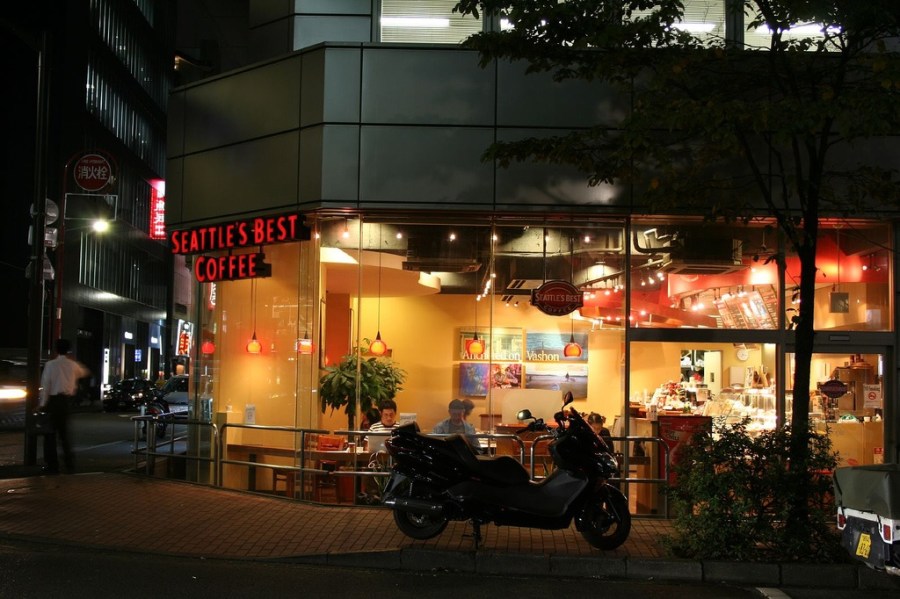
Case 1 – Seattle’s Best Coffee
As already discussed here, I think this is impossible to prove and almost completely implausible when they are faced with the might of Starbucks on their doorstep. I can see why they are making that claim, but don’t really believe they are Seattle’s best. You would hope however that if they are making such a ludicrously bold claim then it should at least be better than average and prepared with some care, skill and dexterity.
Seattle's best coffee and now in Japan?
Case 2 Gillette – The best a man can get?
When Gillette came to the UK, they briefed their agency BDO to look at, and work with, this strapline. BDO rightly pointed out that this was unprovable and as such, couldn’t be used in UK advertising. Gillette challenged this in court and the decision was that they were not claiming they were better than anyone else so therefore, anyone else could also be best too.
It was in effect, top parity. By being at the top themselves, they didn’t have exclusive ownership of that top slot and could share it with others. They have used it ever since in ads that I find continually irritating and tired. I also make a point of not using their products.
This ad from 1989 shows their thinking when they came to the UK with the first use of this strapline. For me, it shows how far we have moved in terms of advertising techniques and what worked then. It is awful, patronising and again, completely implausible. When did you last see an ad this cheesy?
Their brand tags show how effective its been for them however as you can see here
Case 3 – Elf (2003)
When Buddy (Will Ferrell) is wandering around New York, he sees a sign outside a crappy coffee shop and runs in to congratulate them. Later on in the film he takes his new girlfriend Jovie (Zooey Deschanel) for a treat at the home of the world’s best coffee. She is slightly unimpressed – again because it is so implausible.
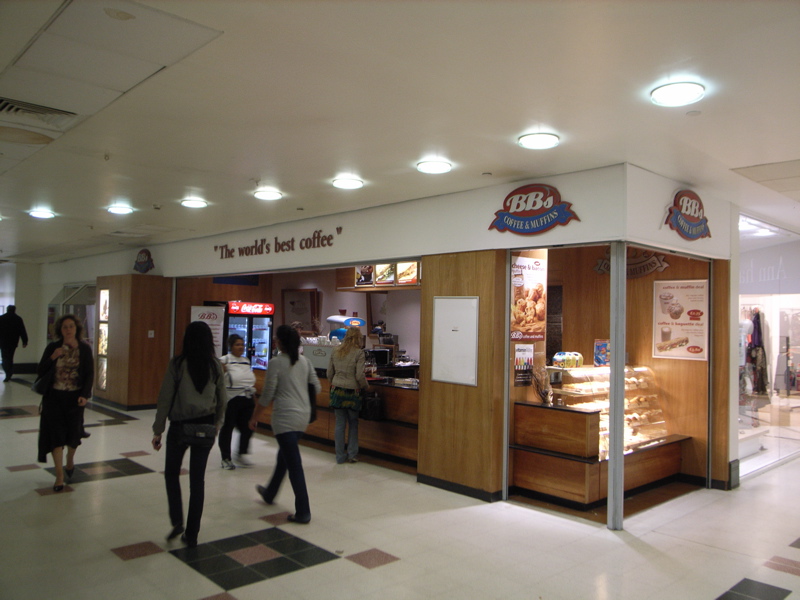
Case 4 – BB Muffins Nottingham
I saw this today and laughed. If claiming to offer the best coffee in Seattle is a big claim, this one is plain stupid.
BB Muffins the home of the world's best coffee - and by law, their coffee is only actually as good as anyone elses!
It’s a bun shop that sells coffee on the side. For them to make a claim as the ‘world’s best’ is 100% ludicrous. I’ve never eaten or drank there, so I can’t vouch for their work, but it’s about as plausible a ‘world’s best’ as the one in Elf.
Case 5. Tina Turner – Simply the best
Hmm, not for me, but as we were talking about this in the office, they dared me to add this to the list, so I did. Enjoy it as it’s from her live tour in 1990 and she’s put on some years since then. Does the word ‘simply’ at the start help with her differentiation?
Summary.
Anyone can claim they offer the ‘world’s best’ as it isn’t a point of difference, it’s just a point of top parity.
To make this claim and deliver a product that is less than world class, will (hopefully) kill your brand forever.
Any brand has to have a clear and demonstrable point of difference, or people will not understand what they are about and what they should feel by having a ‘brand’ relationship with them.
‘Best’ isn’t good enough and ‘better’ normally isn’t provable, so where does that leave all these?
Who else can we add to the list of fame/shame as making brilliant/ridiculous claims to be the best?
Show me the videos or stills and I’ll happily link them off here. Have fun.
Thanks for the Seattle’s best shot to Cloganese. You can see more of his fine work here
This is some very brave advertising by Dixons and you can see the copywriter has had great fun in constructing it. Its beautifully written, there’s no doubt about that, but is it good for the long term health of the Dixons brand?
For me, ever since Dixons profits showed that they made more money selling warranties that we didn’t need than they did from the products themselves, they showed their true colours as sales charlatans. Their brad values were short term opportunistic profits. They became the brand that people loved to hate. John Lewis, with their sensible people offering sensible prices in sensible locations became the choice of sensible people and they filed that void left behind by the Dixons customers who deserted them. They became a better than viable alternative.
But just recently, I’ve started falling out of love with John Lewis. I don’t believe their people are that nice. I don’t actually believe they are never knowingly undersold as I can always find cheaper (they don’t want or allow you to compare their prices with online prices you see!) and I began to doubt the value of their brand promise when I (over)heard people being knocked back when they were trying to return things a few days out of warranty.
So after I’ve walked through the hallowed halls of John Lewis, played with their docking stations, left funny messages on the screens of their laptops, logged them into things they shouldn’t be and and had their sensible staff come along and offer to help me, will I go to Dixons last?
No. Actually I won’t. I’ll go home and buy it online from Amazon, or another online retailer where I know where I stand, I know where and when it will be delivered and where I know that, at the moment at least, I’m a valued customer.
Good try Dixons, but I still think you’re too shady to get my custom in the near future. Keep this up though and I’ll certainly come back into store to look.
Updated
Another brilliant written and crafted ad from Dixons. I’m starting to think they actually deserve some success in what they are doing as they have captured most of our thoughts and more importantly, our actions, pretty damn well.
Another brave ad from Dixons capturing the spirit of what we're actually doing!
CJ as a young corporate customer on his laptop in Starbucks
In an article I wrote recently about place branding, I proposed that the future of branding is unbranded. You can read that here.
What I was arguing against was homogenisation. Standardisation being used as a byword for branding, that decreases rather than increases consumer choice.
And it would appear that Starbucks, in the US at least would agree with this sentiment. In a great article by Tim Haywards in the UK’s Guardian newspaper he savages them for drifting from Happy hippiedom to the same tired old corporate suit as everyone else on the homogenised high street.
For any brand to be able to survive, it has to evolve or it will die. Like dinosaurs did when they failed to build protection against meteorite strikes. Today’s meteorite strikes are coming from the upstart brands and from locally differentiated, welcoming outlets.
In Seattle, there is already a company calling themselves Seattle’s Best and who’s to say it isn’t? (my cup I had in a plane on the way to Seattle was absolutely horrid – see here) But that doesn’t mean its the most loved, by any stretch of the imagination.
With any brand the product is critical, but so is the tribe in which consuming it puts you. You have to feel good about it. You have to bask in its reflected glorious ‘brandness’ and you have to want to tell your cool friends about it.
I think this is a great move for Starbucks.
I hope they have the nerve to debrand their estate, to give their customers the chance to fall in love with them all over again.
I hope they have the nerve to allow their local people to interpret their offer locally and create cool places for their customers to hang out. If that means they want to appeal to corporate wannabe’s then that’s fine, but design your offer accordingly. If that means they want their hippies back, then that’s just as fine – again, design accordingly.
The future of branding maybe isn’t unbranded, but it has to listen to its customers needs and be flexible as hell in delivering what they want or it will go the way of the dinosaurs.
Thanks to Jayne Wilson for the use of the picture of CJ on a Laptop in Starbucks. You can see more of her fine work here.
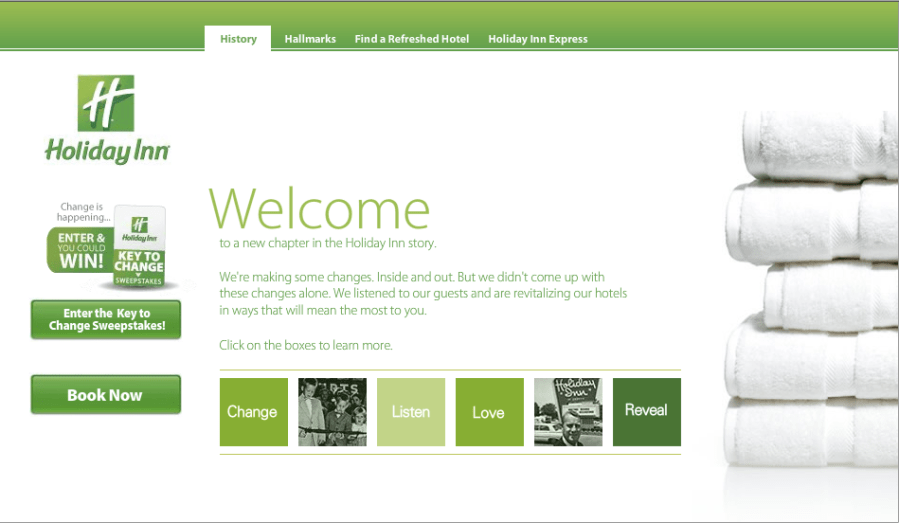
Holiday Inn rebrand – A rebrand borne out of listening to customers
In our role, we see an awful lot of rebrands and we see a lot of awful rebrands.
But not so the rebrand of Holiday Inn, which in my opinion is spectacularly good. It should be for $1billion though.
I’m not impressed because they have created a swish new logo, because the one they have created is only fine. It’s certainly not groundbreaking, particularly different or revolutionary, it’s just fine.
What they have done brilliantly however is redesign the branded experience by listening to their customers.
In their own (nicely crafted) words, they ‘Had a serious heart to heart with their guests – it was the biggest global dialogue that has ever happened in their category’
They are aiming to remind past present and lapsed customers, why they fell in love with them in the first place. Love is a great word in branding and its talked about a lot, but very rarely achieved. Only the real greats ever reach this status and we see them all over in Apple, Harley, Virgin, Sony and the other ‘Lovemarks’ brands.
They’ve taken control of the welcome, introduced (or reintroduced) friendly and efficient check in and even their signature sound and scent.
Wow.
How many brands control their sound and scent?
I stayed in the Holiday Inn, in Back Bay, Boston and the staff were already superb. It was the friendliest hotel we stayed in during our whistlestop US tour but I’ve yet to stay in one of the refreshed ones.
If they can deliver worldwide on this very bold and public promise, that will be one of the most truly outstatnding rebrands ever seen.
Updated
In this really interesting piece on the Wall Street Journal it would appear that Holiday Inn are again doing the right thing by enforcing the switch of their brand from old to new. If you don’t update to their new standards by the end of 2010 they will dump you.
This is where most rebrands or brand implementations fall over. It’s nearly always bad implementation or a lack of implementation altogether. There is clearly a major cost implication for the Holiday Inn franchisees of $150-250k and some will not be able to justify the expense. This will effectively get rid of up to 300 existing operators who will then be ‘debranded’ altogether.
This may be a bit of a rough way to treat your business partners, but it’s vital to remember that one single bad brand interaction can undermine the whole branded experience. By getting rid of these 300 or so, they will reduce the average age of their hotel stock by 11 years to only 15 years old. This is a major percentage change and one that will ensure a more consistent branded experience across the world.
I was impressed before and as I’m not one of those 300 operators under threat, i’m still impressed. I wonder how this will play out in the long term?
Spain has always been one of those places that people loved to hate. Torremolinos and Benidorm have been the butt of jokes, sitcoms and the building of concrete jungles since the early 1960’s when widespread air travel bought the sun, sea, sand and Sangria within reach of the masses.
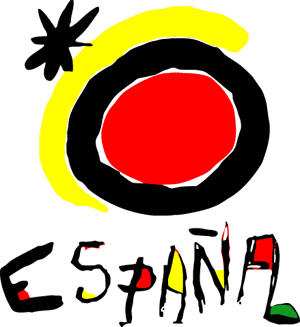
The best ever Icon that completely represents all of Spain's brand values
But when Spain started using the Joan Miró ‘logo’ to represent the Spanish brand, the whole offer started to make more sense. It had in effect, displayed its brand values in one beautifully simple representation to show that it was all about fun, easy living and a lovely relaxed style. For me, it is one of the most beautifully timeless ‘icons’ I have ever seen.
But then it all started to go wrong when they started trying to sneak in a few extra brand values, namely profit and perhaps even profiteering.
One of the attractions for us Brits of a Spanish holiday was always that it was incredibly cheap when we got there. Cheap beer, freshly cooked fish on the beach and change out of £20 for a family of four. The introduction of the Euro saw the first real move away from this with money pouring in from the rest of the Euro Zone and a move towards comparative wealth in the most popular destinations.
But then it all went wrong.
People rushed to buy the cheap apartments, being promised and initially seeing, spectacular growth in value, fuelled by the cheap flights of the low cost carriers. But as we’ve all worked out, there’s no such thing as a free flight and there’s certainly no such thing as a free lunch.
Sun, Sea, Sand and a pretty poor branded investment with a superb view over the motorway
Profiteering was rife. Land that was being bought for comparative buttons, was being converted to thousands upon thousands of Penthouse apartments, and in an exact mirror of the buy-to-let crash in the UK, there soon became a HUGE oversupply and the market tanked.
Where I was staying above La Cala, which was a lovely development, there were only one in eight apartments occupied. Around us in other developments, the figures looked much worse, with one opposite only having three occupiers in over 100 apartments – and that is in the height of their summer season. I personally know three people who are trying to sell (absolutely lovely) places in that region alone and all are now offering them at 40+% less than they were a year ago, with not even a sniff of a viewing, let alone any buyers.
The taxi drivers are reporting a 25% drop in traffic and the one I spoke to said he could not afford to have another summer like it. He had moved from selling timeshare, but he acknowledged, that dreadful mistakes had been made in the property market. Even the taxi market is massively oversupplied with over 400 taxis waiting at Malaga airport on one of the days I was there, for far too few fares.
The restaurants reacted by putting their prices UP, so that a meal for four is a struggle for less than 100 Euro. They too are reporting huge falls in numbers – which is hardly surprising either. The visitors seem to have reacted by staying away and buying from the supermarkets, which still offer remarkable value.
So Spain has completely trashed its brand values. It has stamped all over them and probably ruined them forever. Unless they can rebuild their business case with far fewer visitors and go back to their original values, their situation will get worse and worse and worse – and they already have 25% unemployment in some areas.
Spain is a lesson for any brand owner. Know your brand values, keep them steady and keep looking after your customers. Give them reasons to fall in love with you over and over again and never, ever put profit before quality.
Anyway, Turkey for me next year. If that’s not a Spain waiting to happen, I don’t know where is!
give blood the easy way by taking the collection points where they're needed
I was in Peterborough yesterday waiting the four hours for my passport to be renewed as I’m off to the US next week and only had a few months left to run on my existing one.
Peterborough is not an easy place to spend four hours without an agenda, so I thought I would have a wander around the town.
There in the middle of a busy shopping arcade was a blood van. Not a van covered in blood, but one where you can roll up and hand over a pint or two.
I would class myself as a lapsed blood donor. I’ve given a lot over the years but because the donation centres never seem to be where I am and they seem to insist on giving you appointments at times that suit them rather than those that suit you I just got out of the habit of giving.
We all know that the opposite of love isn’t hate, its apathy, so my apathy towards giving blood must be very typical of many, many people like me. The same principles apply to any brand in any industry.
So anyway, whilst I was giving my armful of the red stuff, 25 or so people arrived at the door asking if they could give blood, only to be told that it was an appointment only session and that it was fully booked for the day. I asked what the capacity for the van was and on a good day they can collect 30-35 packs.
For there to be quite that much latent demand, to me, proves that giving blood has become a ‘spur of the moment’ decision rather than a ‘planned’ decision and as such, the business of blood collection, like any brand or organisation needs to evolve to survive and thrive.
Rather than spending fortunes on TV advertising creating a demand they can’t easily fulfil, why not mobilise a much greater proportion of their collection capacity and take their brand to the people rather than asking the people to come to them.
And, in the meantime, do something amazing – Give Blood
Thanks to UK Emergency Website for the image which is a slightly geeky collection of all of the know emergency service vehicles in the UK
If imitation is the sincerest form of flattery and flattery will get you everywhere, perhaps that’s why all of the best brands of our age are all becoming a bit, well, samey.
And, If green is the new black, organic is the new everyday, and hybrid is no longer just for those who prefer to knit their own yoghurt, I have to ask, what will come next as the real differentiators for our current mega brands that we all look up to?
There is no doubt that any trend is just that, a trend. And trends come and go. I’m not even slightly saying that Howies, Innocent or Rachel’s have copied each other, it’s just that as these are at the front of the curve, the rest of the market will be following. Every new brand we are being asked to look at, needs to add a little hug here and there, a bit of planet kissing and some stout green nosing for good measure.
They are all drifting towards a level of sameness that will slowly see the current heroes be caught and potentially overtaken. Unless they move their own cheese and get themselves into a new and worthwhile position before the others even get there, they will no longer be the top brands in their own sector, let alone any other sector.
I think a change is a coming. I believe that brands grow so fast these days that they are likely to die just as fast. In the perfect market that we now live, where all of the people have all of the information a new brand can literally come out of nowhere and achieve the status of our current heroes.
So where will this brand come from?
A few pointers that have been gathered over lots of episodes of Trendwatching and lots and lots of reading around the subject.
1. It will be from the quality end. This recession ain’t ending fast, so people will buy fewer things but better quality things, that give them the status they seek.
2. It won’t be needed, just wanted Everyday is mundane. It will be a treat that is a little naughty and a bit of a backlash against the goody goody era in which a 4×4 is the work of the devil. Once we all survive the Swine flu myth, we’ll want to kick back and live a little.
3. They will restrict their supply If you achieve worldwide distribution overnight, you kill the golden goose. Leaving them wanting more, works.
4. It won’t be green Like any normal distribution curve, the green revolution will fall off and the responsibility for greenness will be thrown back to the manufacturers. The public will simply expect them to do the green worrying for them.
I’d love to know what people think this new brand or new market could be and whether they agree with my four points above.
Answers on a patent application would be most welcome.
Thanks for the image of his niece Sobrina to Corre Madrid. See more work here.







 Johnny Lyle's new brand thinking