Brian Howard Clough and the brand that is Nottingham

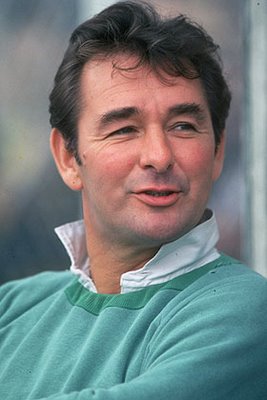
Brian Clough and his trademark green Jersey

I have just read the book ‘The Damned United’ about Brian Clough’s time at Leeds United. To any of you who have read this blog for a while, you’ll realise that I am a bit of a fan of Cloughie’s, so wanted to look at him as a brand to see what he stood for and what made him stand out – two vital elements for any branding programme.

I have read two others about him in the past and will now publicy claim to be one of the people that has edited his Wikipedia page to ensure historical accuracy.

The first thing that struck me was I could see why the family didn’t like the book as it paints Cloughie as a heavy drinking, smoking maniac – which he clearly was not. It does however paint him as a very strong family man – which I am far more certain he was.

So what did he stand for in a brand context?

He stood for straight talking – never letting anyone misunderstand what he was trying to say. Some of his quotes were just legendary – we will be referring to them for many, many generations to come. Perhaps it has taken losing him to realise the brilliance (and accuracy/honesty) of some of the things he said. Interestingly for us, this ‘straight talking’ came out as a feature of Nottingham people when we did the research for the brand for Nottingham back in 2005.

He stood for doing things brilliantly and his own way – whether this was as a father, a player or as a manager.

And for me, he stood for consistency. You always knew what type of reaction you were going to get – even if that reaction was to be an over-reaction.

These three values, would be the making of any brand these days – consciously or sub-consciously – any brand that did these three things would be half way to success.

So what made him stand out?

It could be the green jumper – a remnant of his time at Leeds if the book is to be believed – to get back at Don Revie who believed the colour green was unlucky – and is actually an old Leeds United goalkeepers jersey. All of the iconic pictures of the man show him in this top, from training ground to European Cup success with Forest. In his early days at Derby he was never out of his suit and tie.

But I’d like to believe that he stood out for just doing things so well. I met him once in a newsagent in West Bridgford and I was with my then seven year old daughter wearing her Forest top with her name on her back (a gift from the club to encourage young fans and financed by Capital One) and he was lovely to her. She stood there in awe as this enormously famous man, got down and spoke to her face to face – on her level – and she loved him for it.

You can see a different interpretation of his consistency and success living on through Nigel with his time at Burton and by what he seems to be quietly building at Derby County.

I think we all know, there was a bit of a wobble at the end. It all went a bit wrong at Forest and he lost a battle to drink – but so what? He was a slightly flawed genius.

But he was still a genius, who will be remembered for the great things he did, not the few bad things

Brian Clough is, for me, one of the best brands the City and the people of Nottingham have ever had. I think it is just a question of who is going to make something of it first.
Brylcreem needs to live its values

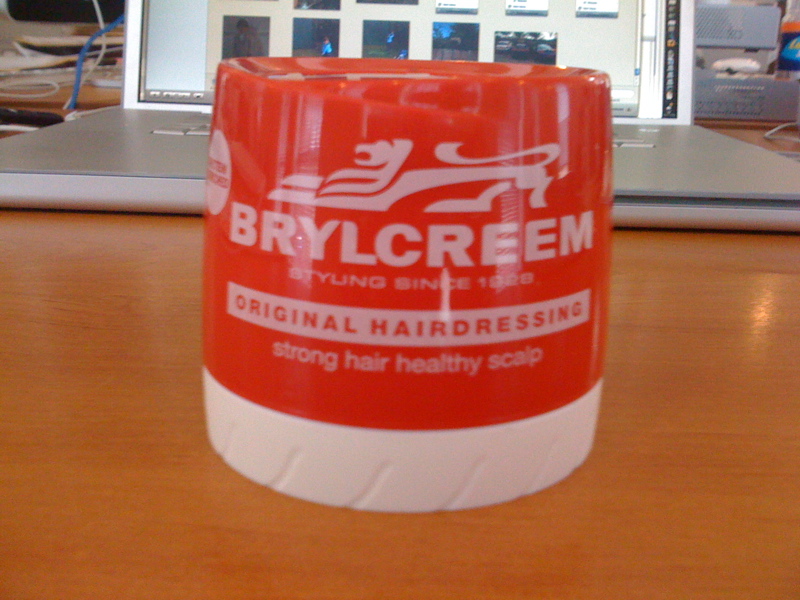
My 11 year old son Ted is playing Danny Zuko in a production of Grease. The house is full of tight fighting black trousers, tight fitting white t-shirt and a perfect leather jacket. So to complete the part with his hair (that he has been growing for two months) where else could I go but to Brylcreem. The haircare brand I would always associate with the era, the film and slicked back hair in general.

Brylcreem - Yours for only £1.00 at Wilko's - WHY?

Now, if you know me, you’ll realise that haircare products are not too much of a problem for me, being rather short in the barnet department. But I like to keep abreast of what’s going on in the world of brands and advertising. I’ve seen the latest ads for the product implying an effortless life, which just ooze coolness.

But when I went to buy some of the stuff in my local Wilkos (Wilkinsons to you and me) they had it discounted to £1.00.

Why?

For what reason did they need to do that?

How would that help them build their brand that they are spending a fortune advertising?

How would that reinforce the cool, effortless brand values they are portraying?

If they needed to shift some stock, why not add some value by bundling it with another product as a trial. They had a sister product (equally disinteresting to me in that it is more bloody hair gel) at £2.79, so why not add a mini trial product of their more premium product.

Why not get me to buy some of their lovely ‘Scruffing Paste’ – Because I need help getting my hair scruffy!

Everyone loves a bargain, but it will KILL your brand if you constantly discount.

Discounting damages brands and in an article I wrote back in February, my research showed it takes seven years to recover from a discounted price.

I bought a black comb too (again, not for me i hasten to add). They could have thrown that in couldn’t they?

Blogging and brand values

There seems to be a lot of blogging going on a Purple Circle at the moment and it’s all to do with some of our own brand values – being passionate and actually daring to have an opinion.

One of our problems with research has always been that it is often used as a tool to hide behind and not as a platform to launch something bold, innovative and different – That’s why we’ll be talking about Purple Circle Brand Insight that we’ll be launching in a few weeks.

So at Purple Circle, we have always encouraged people to say what they think, because it’s the right thing to do, and not necessarily because it’s always the right thing to say. This makes some clients feel uncomfortable but makes others far more comfortable in the knowledge they are paying for (and getting) honest answers and not a bunch of flannel from yes men/women.

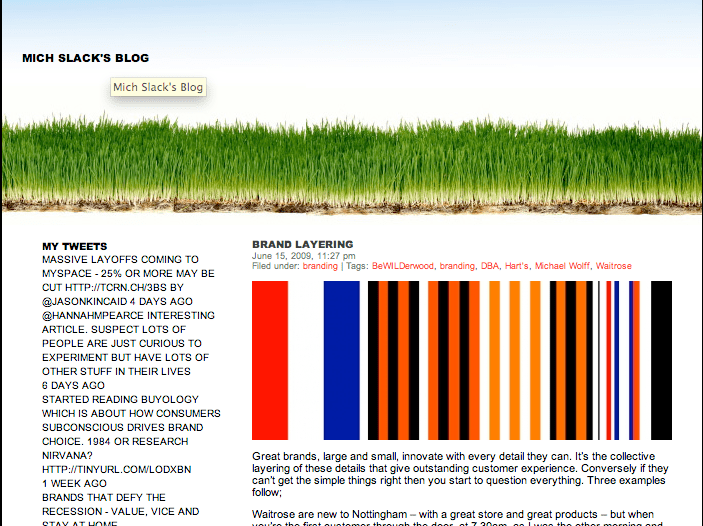
So Michael Slack has started his own blog at www.michslack.co.uk about branding and business, with his first piece being about brand layering, which you can read here.


Michael Slack's Blog at http://michslack.co.uk

Abi Jackson will be writing about more esoteric design stuff in her blog called Pretty Damn Fine with her first piece being about Sanderson designs, you can read that here.


Abi Jackson's Pretty Damn Fine Blog at http://prettydamnfine.co.uk/

So why all the blogging?

Well, simple really. Our clients are asking about how they can get a more clear personality online, about how they can work more cleverly within the social media environments, so what better way to advise than practice what we preach in order to understand it more fully ourselves.

Oh, and that’s not far from another of our brand values either.

Malcolm Gladwell – Outliers – Book review

Maybe I’m biased because I saw Malcolm Gladwell deliver some of this book at a presentation in London earlier in the year, but I have to say that this is one of the most enjoyable ‘business’ style books I have ever read.

It’s not just because he writes so beautifully using descriptions that make you double take and look at the way he has described difficult concepts in such simple terms, but because he makes sense of the many seemingly random subjects he covers.

Has it got any direct relevance to branding? Well probably not, but it does teach you an awful lot.

It’s not the big things that matter, it’s always the series of little things that add up to make one huge success or one huge mistake. In effect, you make your own luck, as long as you know which bits to manage.

Success isn’t an accident (even if it looks like it may be), it’s always about a series of small things happening in the right way at the right time, that sometimes you can only see by looking back at them. I’m not much of a rear view advocate, but in this case, by looking back, you learn a hell of a lot about how to behave when you’re going forward.

If you want to read some more of his musing, then have a look at his site here, or alternatively if you want to hop straight in and buy the book – which I absolutely recommend – then you can buy it from Amazon here.

The Brand that is Alcatraz

If you have any doubt that brands can be in any shape or form, then think of Alcatraz.

What do you see in your mind?

A chunk of rock that is nigh on impossible to escape from.

I see the word Alcatraz and I see the film from 1979 “Escape from Alcatraz” with Clint Eastwood and imagine the ‘Birdman of Alcatraz’ from 1962 – even though this is (a long way) before I was born.

So Alcatraz stands for security and impenetrability and maybe a touch of glamour – because of the film associations.

Branding puts markers in our heads about what we can expect, so as soon as we hear their name, we don’t need to process our thoughts, we just skip straight to our embedded thought.

A good mate of mine is doing the Escape from Alcatraz Triathlon this weekend and I can only imagine how hard it can be.

We know its impossible to swim away from because of the currents and it doesn’t look that nice to cycle around, so if you can do these first and then go out for a run, you’re a better man than me!

Good luck Julian, you’ve got us behind you and a huge powerful brand against you. You can read Julian’s thoughts on his adventure here.

Alcatraz - A brand in its own right that just screams impenetrability

Thanks for the picture, which is by Matthias Orgler, whose work can be seen here.

As an update, if you have any doubt at all that the Alcatraz Triathlon is very tough, Julian has updated his diary and you can read the ‘after race’ story here.

Alcatraz may be tough, but for Julian at least, it didn’t break him, just dent him rather heavily.

Branding on cigarettes – Lovemarks really applies in this sector

In the UK, for an average packet of 20 cigarettes, you would pay around £5.66 per pack. The tax element of this is £4.33, which is a 77% tax burden
If you had any doubt at all, in the value of a brand, you only need to look at two rival brands and the costs they can get away with charging side by side.

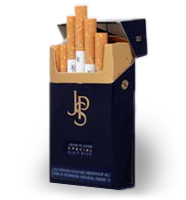
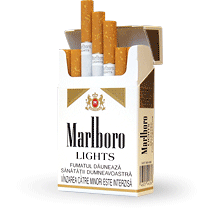
Marlborough Lights sell for around £6 per pack, which gives them a gap after tax of £1.67 or 27.8% and this is the one true ‘Lovemark’ brand within the sector – ie people seem to love it beyond all reason as they will pay a massive premium to be seen with this pack about their person.

Compare that to John Player Special Blue, which as a young boy I started smoking behind the bike sheds, which now retails for around £4.50. Unless they are paying a very different level of tax on this, they have only got 17p worth of margin left with which to make, distribute and share profit with the retailer.

Hardly a moneyspinner, is it?

Who in their right mind wanting to look uber cool would consider being seen with anything else but the Marlborough’s? – Despite the fact they are an almost identical product and 33% more expensive.

During the 70’s JPS was a heavily promoted brand, but was left to die in peace through lack of investment in the core of the brand. It now it seems to have snuck quietly back onto the market.

Surviving on that tiny margin would seem to be impossible, but it does reinforce the power of a really strong and well loved brand like Marlborough.

JPS Blue - your bargain price badly branded cigarette

Marlborough Lights - Your over priced brilliantly branded cigarettes

I’ve written a book called Bottled Spunk – It’s honestly about branding

Over the course of the last year or so, I wrote a book called Bottled Spunk – Its all about branding, and how it impacts, how it works and how to create your own. I haven’t yet got around to looking for a publisher, so I thought I would publish the introduction on here to see whether there was any form of market for it and to see what people’s initial reaction was.

If I get some good comments. then I’ll either publish the full text on here or go out and look for someone to help me take it to market. It’s 20,000 words and in truth has taken me about 20 years of research to get to this draft. So here goes..

1. Bottled spunk anyone?
In February 2004, worried by the success of their Rival Pepsi’s purified water product called Aquafina, Coca Cola felt they were being left out of the fast growing and extremely profitable bottled water market. So, after a great deal of studying the market, hundreds of thousands of pounds poured into research they launched Dasani Water to the UK, expecting a similar success to that which greeted its US introduction.

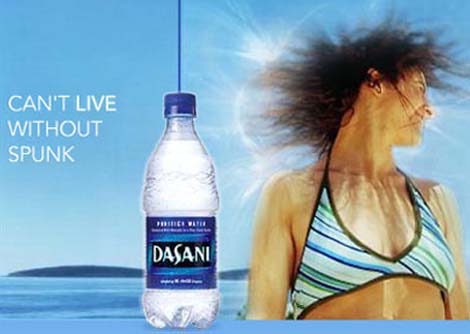
With this successful launch under their belt, they took the decision to recycle the marketing campaigns that had worked so well on the other side of the Atlantic. But in an incredible oversight on the language front, they directed their eager public to their US website. On the front of this was a bikini clad lady, next to a bottle of Dasani water, shaking her wet hair with the slogan ‘Can’t live without spunk’

Can't live without Spunk? Hmmmm, I think I can!

The concept of ‘bottled spunk’ for the advertising and for any mainstream consumer website may not have absolutely universal appeal.

Testing potential issues with a brand name throughout the world is the work of experts, checking a slogan such as this would seem to be a fairly simple exercise – particularly with the might, budgets and brains of Coca Cola behind you. All this work and they failed to spot that in the US, spunk has a rather different meaning – and possibly taste!

Now they may have survived one mistake, but even after that rather shaky start, things still got worse.

A few weeks into the launch, The Grocer magazine happened to note that the water was taken from a commercial water supply in Sidcup, Kent that had been filtered. In effect it was nothing more than tap water. The claims were that because of their secret filtration process and adding of vitamins and minerals, it was particularly pure – even if it wasn’t actually spring water.

The proximity to Peckham could not be missed by the tabloids and they cited the similarity to the Peckham Spring Water that Dell Boy attempted to make famous in one episode of Only Fools and Horses.

Perhaps they could have survived two big mistakes?

But then, to make matters worse again, trading standards got involved to investigate their claims of purity and discovered traces of bromate – a potential carcinogenic that had been banned in some countries.

All the glossy packaging and advertising budgets in the world cannot hide a lie these days. The truth will out.

Our tap water in the UK is 99.96% clean and is the best in any developed nation in the world, according to latest OFWAT figures and costs 0.2 pence per litre. Theirs cost over £1, tasted the same, but could actually be more detrimental to your wellbeing.

When the press outed them, Coca Cola were forced to recall over 500,000 bottles and remove the product from sale only 38 days after they launched. They were left with lots of egg on their face, a redundant factory and a £7m waste of advertising money.

Worse than this, the story ran throughout most of mainland Europe, so planned launches to the lucrative markets of Germany and Spain were both shelved before they ever even began.

If it had been one thing, they still stood a chance, two and it was going to be more tricky, but with mistakes piling up around them, they were left with an impossible situation that only left them with retreat as an option.

Coca Cola are one of the most exceptional brand owners in the world and still made these mistakes by underestimating the global power of brands and the world we now live in where information is instant and worldwide. It is what economists describe as an almost perfect market. It is changing everything we do with brands and you need to work within the opportunities and restrictions it presents.

All of these mistakes could (and would) have been prevented by applying some of the simple rules that we lay down in this book.

What we’re going to show here, is how simple it is to begin to build an exceptional brand for yourself.

We’re going to show you what does and doesn’t make up a brand.

Then give you some simple examples and a step by step procedure to follow to create your own.

We’ll introduce you to the golden rules of what you can and can’t do with a brand and show you where some have taken their brands to the brink, only to save them at the last minute.

And show what some of the best (and worst) examples in the world can teach us about the strange and mysterious art of branding.

My New T Shirt from Threadless

I have to say, I love Twitter, I may even be a Twitterholic.

Okay, my name is John and i’m a Twitterholic.

I also love Threadless. The community based T shirt company that is run as a profitable democracy where the best designs rise to the top and almost anyone can contribute their work if they fancy themselves as a bit of a design guru in the making. Teepay is also making a play for the democratic design space and our good friend Will from Nzime was the second one to get his shirt produced. Its reached the end of its life cycle so is now officially a limited edition item. You can see it here though.

I am also a rather big fan of graphic design, but have run into many of them over the years who, to coin a phrase, are full of shit.

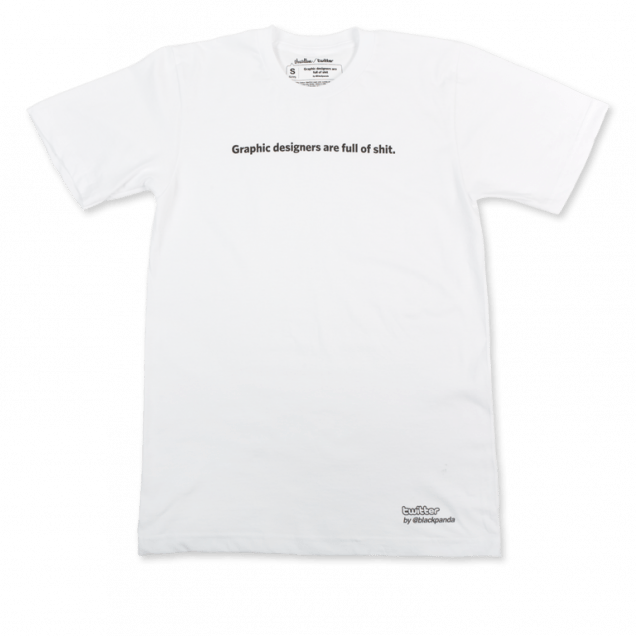
So, imagine my absolute delight when I saw a link from Twitter, to Threadless with a ‘branded’ range of Twitter based T Shirts. There’s a few that play to your ego, but this on eis my absolute favourite and I just have to have it. When it arrives, i’ll model it (in a chubby bald model sort of way) for you all to see.

A lovely new shirt from Threadless

If you like it too, you can buy it here, just let me know when you are going to wear it so we don’t have some embarrassing ‘wearing the same T Shirt’ moment.

Ryanair and the destructive power of negative branding

Ryanair today announced a large drop in their full year profits which are down 78%. After adjustments  (which seems to be an accounting term used for trying to make things look better) they have actually posted a loss of £145.9 Million. They argue that this is all due to a revaluing of their investment in Aer Lingus but for us, this is more to do with the contemptuous way they are treating their brand and their customers.

Ryanair claim they offer many of their flights free, but yet they are still an unloved brand that many of us choose to use through lack of alternative rather than through active and positive decision making. At 20.30 and 20.31 last night two flights left Malaga bound for East Midlands Airport. Two different carriers flying the same route at the same time, which would you say was the busier?

Ryanair is a brand that is all based on price. You expect them to be slow, late and unpleasant and barely functional (even though they actually have a very good record for timekeeping), but you put up with a lot whilst the price is low. If the price rises, you will actively seek out alternatives. Now, in our opinion, many people actively dislike Ryanair.

Conversations with Michael O’Leary, the outspoken chief of the airline business, on the BBC about possibly charging people to use their toilets whilst in mid air hardly endear them to the very people they are asking to pay to fly with them.

In a poll by Tripadvisor of 4,000 of its members in 2006, were the least popular airline – an unwanted accolade they have gone on to retain in 2007 and 2008. In theory, people would therefore not use them. But their continued growth since then has proved that, whilst the price is right, people will still travel with them.

Maybe this drop in profits is the sign that their contemptuous treatment of customers and having a brand that stands for ‘tricking’ customers into paying more is one that is just not sustainable.

Michael O’Leary was talking recently on German TV about potentially offering long haul flights and what their version of business class could stand for. You can view that here, but watch out as he speaks less than politely.

In an interview this morning for the BBC, he said that their continued growth proves that Business Class is dead (as an obvious dig at British airways), but which is it to be? Blow Jobs on Business Class or sticking to their low cost, low service model?

With any brand, you have to decide what makes you different and then deliver it beautifully and consistently in every single way. Ryanair certainly deliver consistently, but beautifully, I think not.

I know who I’ve booked my family holiday flights with in the summer and it isn’t Ryanair.

Ryanair claim they offer many of their flights free, but yet they are still an unloved brand that many of us choose to use through lack of alternative rather than through active and positive decision making. At 20.30 and 20.31 last night two flights left Malaga bound for East Midlands Airport. Which would you say was the busier?
Ryanair is a brand that is all based on price. You expect them to be slow, late and unpleasant and barely functional (even though they actually have a very good record for timekeeping), but you put up with a lot whilst the price is low. If the price rises, you will actively seek out alternatives. Now, in our opinion, many people actively dislike Ryanair.
Conversations with Michael Ryan, the outspoken chief of the airline business, on the BBC about possibly charging people to use their toilets whilst in mid air hardly endear them to the very people they are asking to pay to fly with them.
In a poll by Tripadvisor of 4,000 of its members in 2006, were the least popular airline – an unwanted accolade they have gone on to retain in 2007 and 2008. In theory, people would therefore not use them. But their continued growth since then has proved that, whilst the price is right, people will still travel with them.
Maybe this drop in profits is the sign that their contemptuous treatment of customers and having a brand that stands for ‘tricking’ customers into paying ore is one that is just not sustainable.
Michael Ryan was talking recently on German TV about potentially offering long haul flights and what their version of business class could stand for.
You can view that here, but watch out as he speaks less than politely.
In an interview this morning for the BBC, he said that their continued growth proves that Business Class is dead (as an obvious dig at British airways), but which is it to be? Blow Jobs on Business Class or sticking to their low cost, low service model?
With any brand, you have to decide what makes you different and then deliver it beautifully and consistently in every single way. Ryanair certainly deliver consistently, but beautifully, I think not.
I know who I’ve booked my family holiday flights with in the summer and it isn’t Ryanair.