Mike Jeffries A&F Messed up his own company – Couldn’t have happened to a nicer bloke
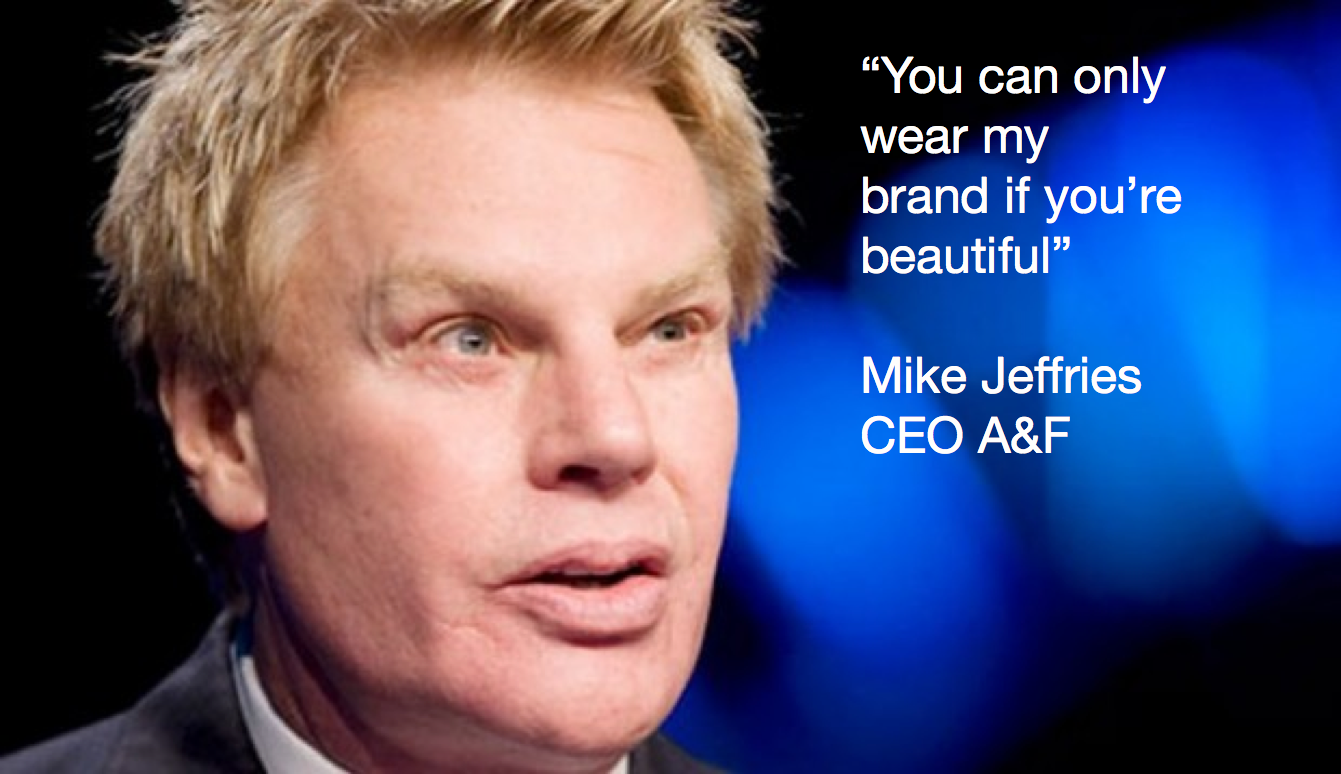
I love an article like this. Total Customer are reporting that Abercrombie & Fitch are having to remove their branding from their branded products, because it has become a turn-off for customers.
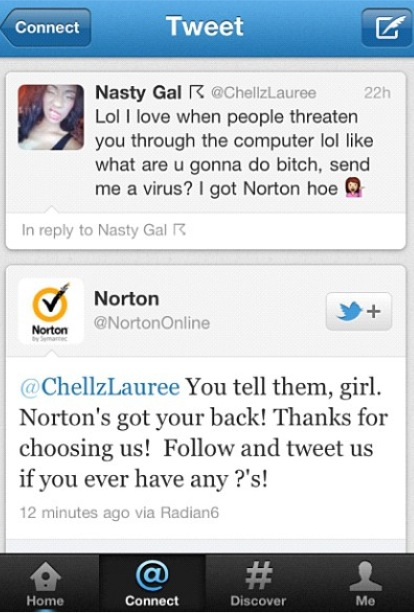
A while ago I laughed at O2 for trying to get down wiv da kids and getting it horribly wrong. What they did was try to speak in the voice of their audience rather than in the voice of their brand .
Norton, on the other hand have stuck to their script and still intervened with one of their customers. This is a far cleverer way of handling it and shows a great choice of strategy for social media. Nice one Norton.
When you set out to create a brand you can design in certain criteria. By pricing it high, you exclude certain buying groups, by not even making XL sizes for women, you naturally exclude the larger ladies. They also place ‘beautiful people’ in a state of undress outside their stores as greeters. These decisions form the basis of the whole brand and who you target and appeal to. I am far to old/fat to be in their target audience (but so is their own MD!) and I am now quite proud to say I have never owned any of their products.
Mike Jeffries Abercrombie and Fitch Managing Director – looking a little like a bad advertisement for facial surgery – and certainly not in his own target audience
But Abercrombie and Fitch have taken this brand separation to a new level by destroying all damaged or returned goods rather than giving them to the homeless, as many other brands do. All very deliberate and all very elitist. the assumption being that seeing homeless people in A&F would embarrass their own beautiful customers.
But here comes the brand backlash. 7.5 million views in less than a month, and growing fast. Watch this space. It may be the next Gerald Ratner moment for the A&F brand.
One of the biggest areas of work for me at present is delivering a brand experience for different brands. It’s about living your values through what you do, how you do it and who you do it for.
Hot Wheels is a brand to admire as they are so clear and consistent in what they do. We all had the orange track in our bedrooms as kids and made our toy cars do all sorts of impossible things. Well, now they have taken it one stage further, by bringing their brand to life. Literally.
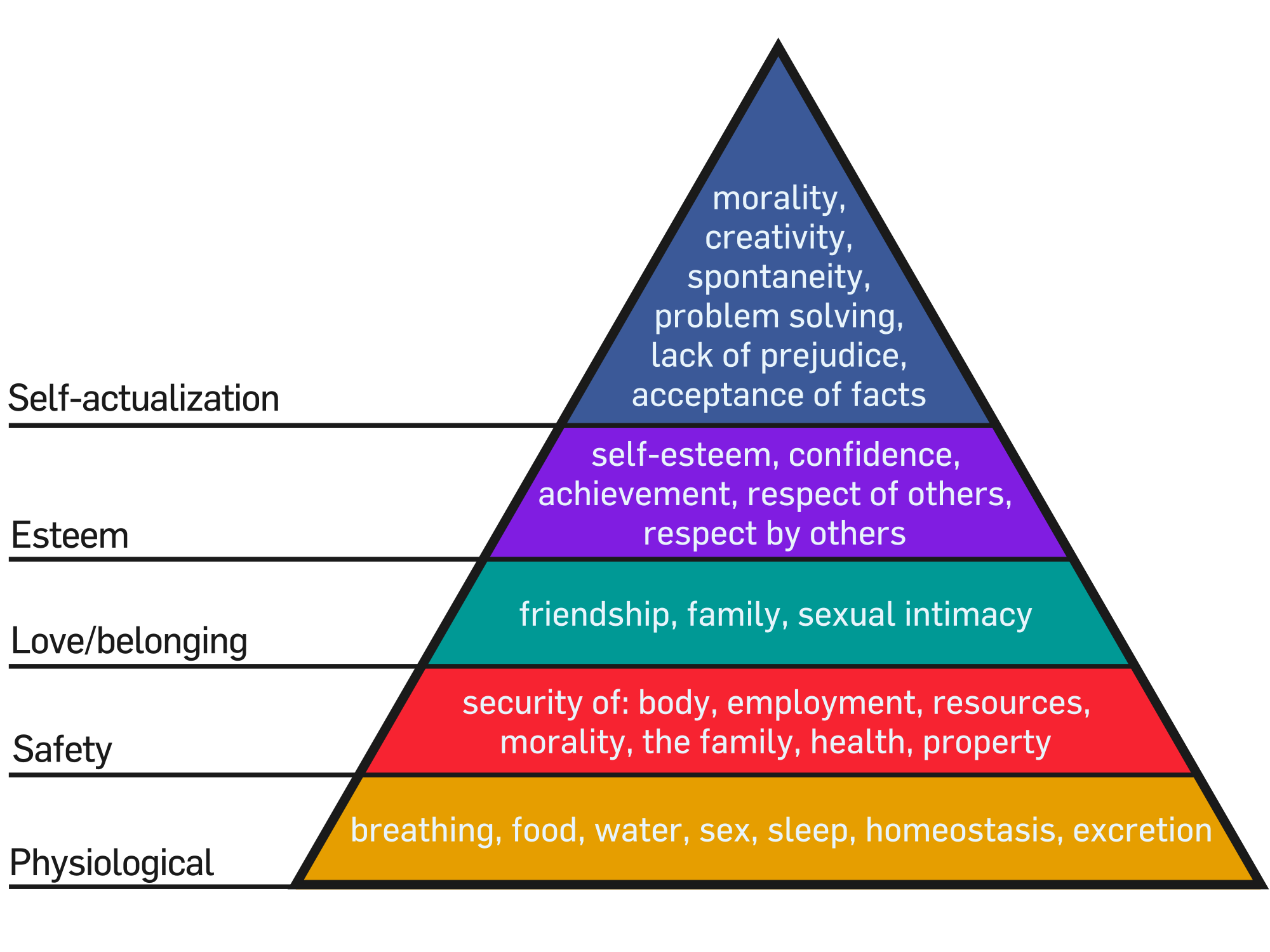
Maslow. Fond as I am of your Hierarchy of Needs, I think it needs a little review
When I was at college studying marketing, this was a classic piece for us to learn. Maslow proposes that as we grow and attain civilisation and wealth, we move up the hierarchy of needs.
But I think the model is still potentially relevant, just far more muddled than it used to be.
Replace the Physiological needs with getting the mortgage paid and staying out of fuel poverty and you cover a very large proportion of the population.
But what has changed in my opinion, and what matters to people who control brands, is that he progression through the hierarchy is no longer, well, hierarchical. I believe many people now jump from the bottom right to the top. I’ll explain.
For many this is as good as it’s going to get. If you have ever read the book ‘We need to talk about Kevin’ (you should) the reason for all his pain and violence is that even though he is from a normal middle class family, that just wasn’t enough. He wanted recognition too.
Change the word ‘recognition’ to ‘self worth’ and you have an important jump.
If this is as good as it’s going to get for many. They still want more. They want to know they are doing things with their life that have worth, that makes them feel good about themselves.
So for me, it’s an early trend. More people doing more good, creative and artistic things – not for profit, but for self worth.
So if you own or control a brand, it’s time to start thinking what’s in it for them. How can they feel better by hanging out with your brand.
Howies summed it up years ago in a mailer, when they asked whether I just had enough stuff. In truth, we all have enough stuff, so what I’m saying is that we need a little more thoughtfulness as well.
Tesco as a business isn’t doing badly. It’s profits are still huge, even if they are slightly down on previous quarters in the UK.
But for me, this is masking a much bigger brand problem and that is because nothing they offer is special any more. They don’t make customers feel valued, they don’t surprise or delight us, they just keep chipping away at prices by chipping away at suppliers who have no choice but to chip away at the quality.
We have always believed that the way a brand should behave is to decide a price and then see how good you can make the product for that target price. To me, Tesco look like they are aiming to produce all of their goods as cheaply as possible and not seeing how good they can make them for the money.
This is a short term profit boost that leads to long term decline.
Look at the section with motoring and cycling products. If you are even slightly into either pastime, you will see that what they are selling is utter crap and not cheap either. This is one tiny category in a huge store, but it’s reflection reaches far and wide in perception. If everything in the store is as badly produced and as nasty as this, why would I trust the brand overall?
Unless they up their game, start focusing on quality again and start treating their customers as intelligent individuals who do have a choice, this will be the first of very many profit warnings to come.
The Haka has always been something I have watched with fear and admiration, but today in the final of the Rugby World cup, I saw it for the first time as a brand marker for New Zealand. It shows their power, their determination and their ability to stand, miles from anywhere else in the world as a distinct nation, that is proud of its roots.
If you were going to write a few rules about a brand, they would be simple.
Do things well
Mean them, ie live your values
Build on your roots
Be differentiated.
They seem to have done all of these rather well here. And to be honest, it’s the first time I have ever seen anyone respond to it like the French. What a brilliant advertisement for the country and the sport of rugby.
You know your brand is in some sort of trouble when you get genius comics Like Dan and Dan writing brilliant skitts of what you do and tearing apart everything that your hateful, petty minded, bigoted brand stands for. Nice one Dan. And Dan. Love it.
I’ve been catching up with some of my Podcasts over the holiday period and this one by Jack Welch seemed to be good advice for all sorts of situations from MP’s expenses to any bad publicity your brand faces.
In his PodCast on 31/10/08 The Welch Way, Jack Welch, the former CEO of GE explains what he thinks you should do if you are getting a mauling in the press.
1. Get the whole story out there immediately. Their job is to deliver the whole story and you can rest assured they will find it, whether you like it or not.
2. Be consistent in the way you tell the story to which groups. Don’t tell them what you think what they want to hear. These inconsistencies will be reported and you will be well and truly caught out.
3. Be proactive. Tell your story by taking it into your own hands. You can’t change the coverage to your liking, but you can get the last word via your own websites and blogs. As long as your site has a reputation for being truthful/soul searching rather than propaganda you can still win in the end.
All of this applies to a news story as well as the way you manage any brand. Tell the whole story truthfully and consistently and you will win if the product is good enough every time they come into contact with it.
On the day when Liam Donaldson, the Uk’s Chief Medical Officer, announced that allowing children to drink under 15 is not just a bad idea, it’s dangerous, I thought it would be a good idea to look at Kids and drinking from a brand perspective.
I only need to look at various nieces and nephew’s Facebook pages to see how many of them are drinking well under the legal age. My dad ran a brewery, so we always had lots of beer in the house but I guess our generation has just grown up with far lower price points, far stronger drinks widely available and a far more liberal attitude to drinking at home than any generation before us.
I’m not one to lecture on this as I was smoking well under age with most of my peers, but almost all of them have given that up. It does seem that smoking early is perhaps inevitable as part of the ‘trying to be a grown up’ process but at least it’s one that most grow out of. Drinking isn’t though.
From a branding perspective, getting associated as a kids drink is very bad for their long term health. It always seem to kill them in the end.
Diamond White was (I think) the first of the premium bottled ciders and after a while, gradually started moving from 275ml bottles (ie a small and controllable amount) into 500ml cans and then eventually into 2litre PET bottles. In doing so, they cheapened the brand, killed it for ever as a premium product and ensured it’s demise.
It was also announced today that White Lightning, it’s spiritual successor is being withdrawn too as the brand owners are admitting it has become a problem for them.
Andy Dawson, in his brilliant article (here) reports on the decision by Heineken’s Marketing Manager in charge of the brand Mark Gerken,
‘He admitted that white cider “is a problem drink” for the booze industry because it tends to have negative connotations with “the park bench,” adding: “We’re trying to distance ourselves from the negative images that the old traditional category had. Cider is now much more about enjoyment, refreshment, sharing and over ice.”
In other words, it used to be for tramps and now it’s just for twats’
White Lighning as shown by some of their underage core audience enjoying a quiet parkside drink
Brilliant. They are attempting to relaunch cider upmarket again, which probably means it will drift down towards being a kids drink within the next few years.
And there’s Stella, or Wife Beater to it’s friends. It used to be reassuringly expensive, now it’s worryingly cheap. Partly because they changed the recipe to allow them to hit new price points, so they could chase market share. In doing so, they took away one of the key differentiators of the brand – which was that it was far more flavoursome and better quality than other similar beers – and made it accessible to kids.
There has to be another generational change to make drinking a social occasion rather than an ‘all the time’ occasion, or there will be far more teenage alcoholics, dying kids and lots more dying beer brands.
Adults and beer brands shouldn't really try to get down there with the kids
Beer brands, like most adults, shouldn’t try to get down there with the kids, it will kill all of them in the end.



 Johnny Lyle's new brand thinking