An Innocent tale – Updated

A little bit of Innocent fun

I’m reading the rather excellent book about Inocent Smoothies called ‘A Book About Innocent: Our Story and Some Things We’ve Learned’ Which is absolutely excellent and really confirms many of our thoughts about how real branding works. There seems to be so much power in the detail that they take seriously that anyone in any industry can learn from reading this enjoyable book.

I’ll write a full review in the next few days when I’ve finished it, but had to relay one of the brilliant stories in it.

Innocent often put ‘joke’ ingredients in their listings and on one, they added the odd ingredient of ‘Two Plump Nuns’. This was designed to show their purity and innocence – a lovely and funny thought – but really not one to be taken too seriously – who would really be thinking there was bits of nun in it, plump or otherwise?

But not according to the Trading Standards people, who after some to-ing and fro-ing wrote them a letter that essentially said “either you add in two plump nuns to your smoothies, or take them off your ingredients list.

Brilliant.

You can buy it here and I would absolutely recommend you do.

Latest news update
I bought a bottle of the superfruit smoothie today which was lovely and has a brilliant story about the bees knees on the side, so I thought I would write and let them know how much I enjoyed it and how much I was enjoying the book.

So I wrote and said “Afternoon

I just wanted to say I love your bee story on the side of your bottle. And I am loving your book so much, I was forced to blog midway through it about the Plump Nuns

https://johnnylyle.co.uk/2009/07/07/an-innocent-tale/

Thanks for helping me with a lovely healthy lunch

Cheers John”

and then only eight (yes 8, go on count them) minutes later I had a very nice reply from a lady called Rowena which read

“Hello John,

Thanks for your e-mail. Great to hear how much you’re enjoying having a read of our book and the Plump Nuns story. Hope you like the rest of the book too.

All the best,

Row”

Now I guess I was expecting a reply, but a personal one in 8 minutes is exceptional and the reason they are such a fabulous business ad a brand that any sensible business should envy and learn from. I am now a devoted fan!

‘Who moved my cheese’ by Dr Spencer Johnson book review

You need to be a fast mouse to catch the moving cheese

What an amazingly simple little book this is. I was expecting to hate it and having read the first few pages, I knew I was going to hate it, but the beauty of this book is its sheer simplicity.

It’s a tale of two mice and two little people who discover a huge supply of cheese and proceed to stuff their faces with it until it runs out.

Obviously there’s a moral to the story that relates to a more general business context.

The two wise ones, realised the cheese was running out and working together, moved on before the supply had completely run dry. The slightly less dim one realised that perhaps the cheese supply had been running a bit light, and was not as fresh as before and he had perhaps been taking it easy for a while. Luckily he moved on before he lost everything and after lots of hard work, found a new supply that was even better than before.

Only the really dim one lost everything. He refused to believe the cheese had gone (ie the market had moved on) blamed everyone else for it moving and essentially sat in place sulking about how unfair it all was. He insisted that someone had moved his cheese.

The parallels with industry are obvious and strikingly simple. For a 30 minute read, it has to be worth a go.

There are so many markets been lost and found these days in such an incredibly short time, its getting harder and harder to spot who moved the cheese and where its gone.

But after 18 years of running a design business, we’ve chased a lot of new cheese and thankfully caught it so far. When it moves again, after reading this, I’ll be quicker still to react.

You can buy your very own copy of the book Who Moved my Cheese by Dr Spencer Johnson from Amazon here

Thanks to MVA for the lovely mouse pic. You can see his work here.

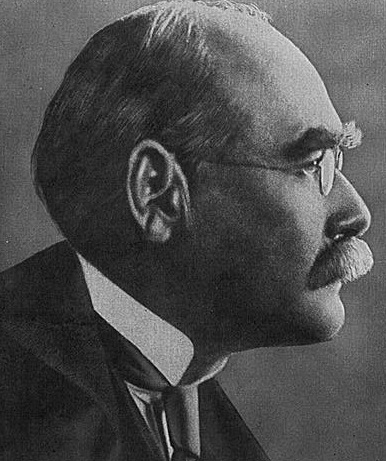
What you need to ask in order to create brand that really works in the words of Rudyard Kipling.

Rudyard Kipling - Six wise questions to create your brand

The Elephant’s Child

I KEEP six honest serving-men
(They taught me all I knew);
Their names are What and Why and When
And How and Where and Who.
I send them over land and sea,
I send them east and west;
But after they have worked for me,
I give them all a rest.

I let them rest from nine till five,
For I am busy then,
As well as breakfast, lunch, and tea,
For they are hungry men.
But different folk have different views;
I know a person small-
She keeps ten million serving-men,
Who get no rest at all!

She sends’em abroad on her own affairs,
From the second she opens her eyes-
One million Hows, two million Wheres,
And seven million Whys!

In short, if you are branding, thinking of branding or looking at rebranding, act like the Elephant’s Child and ask the six wise questions. If you do this, you can create a brand that is differentiated enough to really work.

Ignore it at your peril.

There’s no such thing as a stupid question, it’s just stupid not to ask them.

It’s not about branding – it’s the product

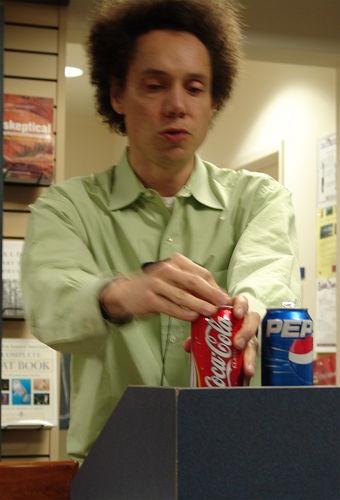
Malcolm Gladwell chooses between Pepsi and Coke?

I think we can all get a little distracted by brands and branding. Convinced of our own brilliance and self glorifying world that creating a quirky little logo will have the punters pouring in.

Well I’m here to dispel that rumour. It won’t.

A good logo on its own will not win you a single customer. Not one.

A bad one can however, stop you even being considered for calling up.

Bad logos are hateful, every designers worst nightmare and we love the glow from great work. Peer respect is important in almost every industry and we all feel good when our work is rated.

But it’s the product that really matters, branded or not.

If the product works and people feel comfortable with owning in – no proud to own it – no even delighted to give you their custom and eulogise to their friends about how great it is, then you know you have a potential winner.

So here’s one for you. Which search product is better?

Bing – Microsoft’s new baby
Google – the worlds most dominant search provider
Yahoo – yeah, remember them?

Well now you can see, in a blind test. Judging only by the efficacy of the product. How quickly did it give me exactly the answer I was looking for, how efficiently my problem was solved or how painless the experience was.

Try it for yourself with this Blind search tool.

It comes from a very clever man called Michael Kordahi who has his own blog here.

It means the branding is irrelevant and you have to choose on the results.

Now I will add the caveat here that blind testing is not always a faithful predictor of what you are going to do in future. Martin Lindstrom in his book Buyology massively disproved that, but it will make you think.

Now Pepsi also tried this with their own taste tests. For years they proclaimed that people preferred the taste of their brown fizzy water over Coke’s but it still didn’t translate into long lasting sales. (although it did prompt the launching of ‘New Coke’ if Roger Enrico the former Pepsi CEO is to be believed.) Latest thinking shows this is more to do with it being a sweeter drink (which is easier to like in small quantities) than it actually being preferred as a long term brand ‘friend’.

Anyway, try it for yourself. See which you think really works, brand or no brand.

Thanks to Niall Kennedy, for the use of the Malcolm Gladwell (my hero) Pepsi v Coke image

The increasing importance of business cards

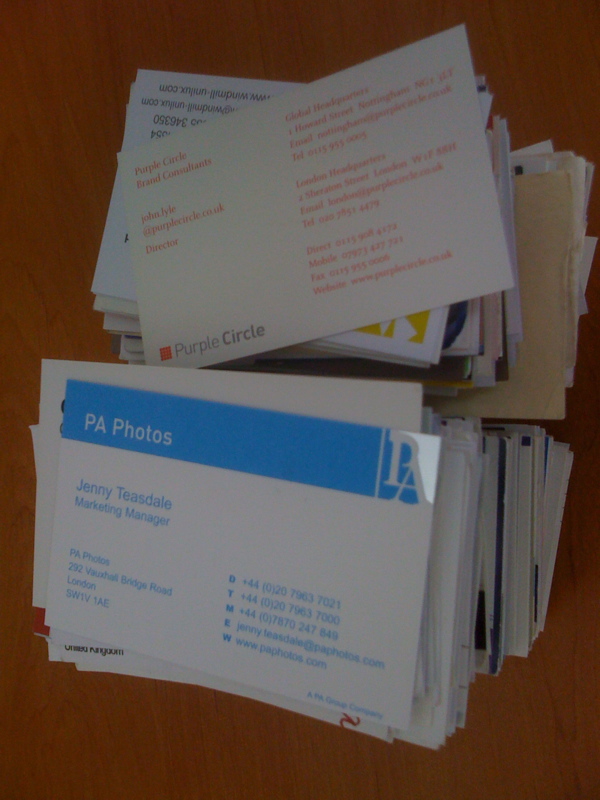
A big pile of business cards

In the old days, long before I was even a twinkle, when men wore ties and waistcoats, gentlemen’s calling cards were the thing to have to prove you were actually a gentleman.

In the late 1900’s they were an essential accessory for anyone who did not want to come across as a cad. According to the book ‘Our Deportment’ from 1881, where they summarise its place in society…

“To the unrefined and underbred, the visiting card is but a trifling bit of paper; but to the cultured disciple of social law, it conveys a subtle and unmistakable intelligence. Its texture, style of engraving, and even the hour of its leaving combine to place the stranger, whose name it bears, in a pleasant or a disagreeable attitude…”

For me, they are coming right back into fashion. As our entire world moves online, your offline presentation will come down to differentiating yourself with your card again. Unless people are actually interested in engaging, or even doing business with you, they will never see your brochure, they will never download your corporate profile and they may never even be engaged enough to see your website.

We are so bombarded by the different media channels where we have the opportunity to see people’s ‘stuff’ that the simplest becomes the most important again.

So as part of your overall, brand presentation, never underestimate the importance of doing the card part right. In the 1800’s, they talked about texture and so do we – constantly. A card that looks and feels right is essential for any gentleperson in business today.

It may be a very little detail in your mind, but if it’s all that anyone is seeing, it could be every detail in their mind.

As an addition. i’ve just been shown these which I think are brilliant!

A Kit Kat is NOT the same as an Aston Martin

Kit Kat is a chocolate brand that has a bit of history behind it when it comes to messing around with their brand and seeing how far they can stretch it.

Not all of it has been entirely successful either.

I was running through the various brand extensions in my head and could quickly remember orange, mint, dark, chunky, two finger, four finger, ones with noisette filling, chunky peanut, caramel and one called a duo.

They tried to aim them at the health conscious, with 100 calorie badging and they even tried marketing the bigger ones to people who thought the little ones were a bit too girly.

They are an example of a brand stretching policy that went too far. So far in fact that, according to Wikipedia, Chris White, the Managing Director of Nestlé Rowntree left his job a little abruptly in 2005 amid accusations of him damaging the long term health of the brand, by his watering down/stretching methods.

So I have to say, that I was more than a little surprised to see that Aston Martin are planning the launch of a City Car based on the Toyota IQ.

Aston Martin Cygnet - hmmmmm!

What a ridiculous idea. What a totally ridiculous pox of an idea.

They already know they are in the wrong as they are saying it will only be available to existing customers. Apparently they are worried that Aston martin owners drive City cars too. I would guess that most Aston Martin owners can probably drive pretty much what they want as second cars.

Are they worried they fly and may use trains as well and start building these?

You simply cannot own every bit of all of the markets. You can be brilliant at what you do and stick to it. When you specialise and you are brilliant at it, you make money.

Its taken twenty years for Aston martin to become a superb brand again. They’ve done this by building beautifully designed, beautiful quality cars that people would love to own. Those that can afford to, do. They haven’t gone just around banging a new grill on Jaguar.

According to the Piston Heads website, it may be more to do with Aston Martin needing to lower their overall CO2 emissions as a business to get around some new and rather nasty US/EU directives on average C02 outputs – which will save them millions in taxes and could effectively make the production a cost neutral launch.

But even taking this into account, if you water down your brand and try and offer something for everyone, you end up with MG badged Maestros – and look what happened to Austin Rover.

The magnificently awful MG Maestro

I hope they don’t launch this and kill it before I have a chance to own a real one, because I certainly don’t want a Toyota one.

Tango With ATtitude

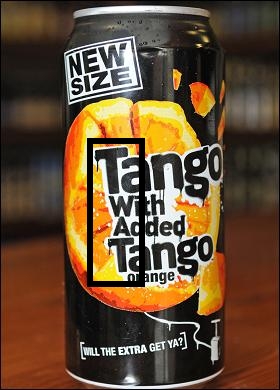
Tango with added TWAT

I’m really not sure if this is on general release, but I spotted it on the blog of Carwyn Lloyd Jones and have been trying to find it ever since. It has either already been withdrawn, was never actually widely distributed or may be just a PR mock up.

It’s hardly subtle in the grand scheme of things, but in the steady move by Tango towards it being a more ‘attitudinal’ drink, this is a great stunt. I can imagine the Tango Man of old finding this gag vey amusing.

It feels a bit like the ‘slag of all snacks’ for Pot Noodle, that was eventually banned and must have had the creative team wetting themselves laughing at he poor account handler who had to sell it in.

But anyway, nice work – If you can find one, you’d be a twat not to try one today.

Christine the clever cleaner

I don’t often read the West Bridgford News. It’s a bit of a local rag that is full of badly written blatant ads with the subtlety of a psycho with a hammer, but over my breakfast cereal today happened to be flicking through the latest copy to land on my doorstep.

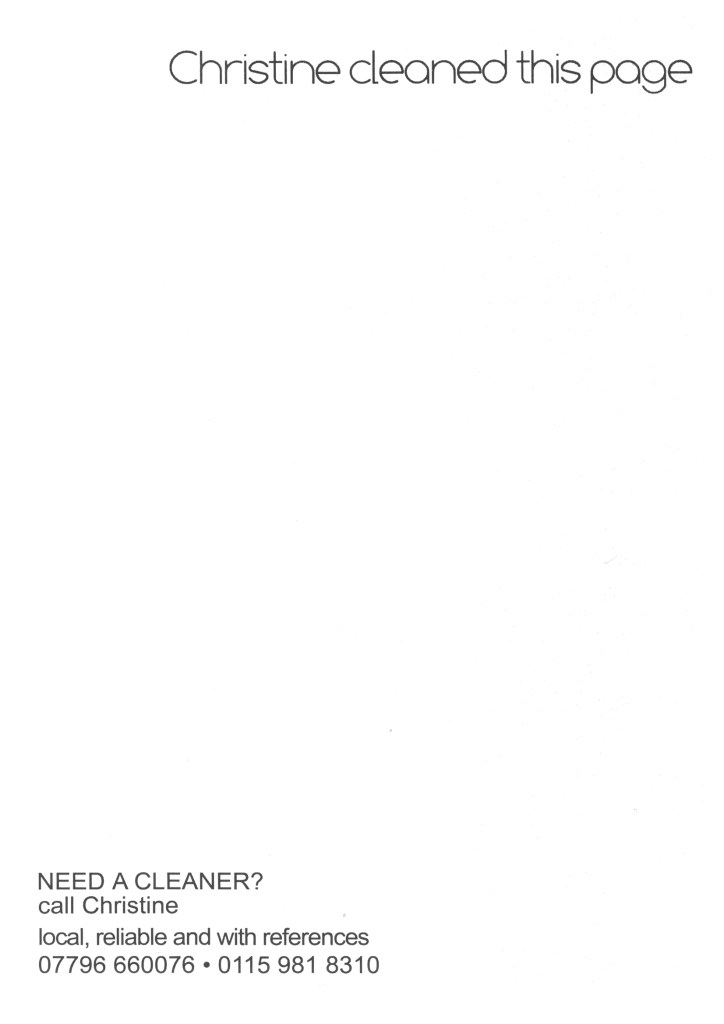
And then this ad jumped out at me. Christine the cleaner with one of the best ads I’ve seen in years, that was 100% out of place in such a low grade publication.

Christine the Clever Cleaner

I don’t need a cleaner, but I had to ring them to find out more. Apparently business has doubled since it ran in another local magazine, but they still have space for more clients.

Christine Dalby (the Christine in question) was lovely but her husband Bill, had to confess that as a young economics undergraduate, where they were studying advertising as part of his course, he was taken with a story from the deep and distant past in the history of Hoover.

Apparently a young Hoover employee in the advertising department was left on his own and being badgered for copy by the Daily Telegraph. With no line managers to ask advice and no obvious ad to hand, he ran an ad that was effectively a blank page with the words in the middle ‘Hoover cleaned this page’.

And the ad, took the market by storm.

Now, try as I might, I can find no trace of this old ad and would love to see it, so if anyone has any idea of where I could find a copy of it or knows any more detailed history, please let me know.

In the meantime, if you live in and around West Bridgford in Nottingham and you need a cleaner, please call Christine or Bill. If they clean as well as they write ads, they’ll do a thoroughly brilliant job.

Christine Dalby can be contacted on 0115 981 8310 or mobile 07796 660 076.

It’s not research it’s brand insight

I’ve spent all morning today with the extraordinarily clever Barrie and Vicky from Park Lane Research who have been teaching us all about Brand Insight.

In the old days, this may have come under the misnomer of market research, but it’s been rebranded and seems to work a bit better now.

As we start to work on bigger and bigger projects as a design and branding business, we are increasingly asked to justify our ‘gut feel’ and experience school of advice with some real figures and some data that is valid (rather than assumed).

The real difference between brand insight and research is twofold for me.

1. There’s no fence to sit on, no focus group to hide behind and no weasel to worm you out of a difficult question. You simply speak to your customers or perhaps those who aren’t your customers – and then find out what they think. You listen and then act. Not use them as a crutch because you’ve already acted and need a friend on your side.

2. The second and most exciting one for me is that brand insight looks to the future. Every example I’ve seen of market research seems to be retrospective. It’s taking an historical perspective on what has happened. Brand insight is far more about making a more informed decision about what is likely to happen in the future.

I am an avid fan of Twitter and believe that I learn something new almost every day, but yesterday was a bit of an epiphany day for me with one of the most remarkable comments I have ever read – that will genuinely change the way I look at branding going forward.

It came from someone I had never met before whose name is Joelle Nebbe-Mornod and can be found on Twitter under the name of ‘iphigenie’ and who is blogging here.

What she said was …

‘The perverse effect of branding is that it creates a need for control – control every bit of message, because a brand is so fragile’

I talk a lot about message management, and edged towards control, but had never considered a brand to be fragile, even though I have written about brands for years. This statement has made me think that if we are to protect any brand, any product and any organisation in what is becoming the economists perfect market economy – where all the punters have all the information they need to make the perfect buying decision, we have to be pretty clear on our facts.

Hopefully, with our new brand insight partners, we’ll move beyond simple control, we’ll move to freedom. We simply want to produce better products that we are happy to put our name, brand or mark to. The better we make the products, the stronger we make the brand. If it is cool, you love it, it makes you feel good and it is better at what it does than anything else on the market, surely everyone wins?

Except the cheapskate competition.

We can only hope. Thanks for the following picture from Patrick Looney.

We can only Hope
We can only Hope

Why Setanta failed

Setanta was always going to be a difficult launch for a number of reasons.

They were coming into a market that was already dominated by one really major player with massive financial muscle. Sky.

And they really failed to differentiate themselves. They presented more as a Sky wannabe than as a unique brand in its own right. Their initial advertising was more to do with people getting the name wrong than their unique content.

Was it Sultana, Santana or just Des Lynam being paid to add some much loved but misguided British celebrity? For me, it was a combination of all of them. A big boobed model chucking some pies down on a chuck wagon counter is not differentiation, its stupid, silly sexploitation that speaks down to its potential customers.

But worst of all, we were expected to pay extra for the privilege of being a customer. As Des says ‘Under a tenner a month and no annual contract – with games that Sky doesn’t have’.

By comparing themselves to Sky, they were introducing doubt into people’s mind straight away. Were they Sky? Were they as good as Sky? And what games or sports events do they actually have that people wanted to watch?

For me as an Oxford United fan, it was great seeing them all the time on Setanta in the mightily overblown Blue Square Premier. But I only got it as part of my Virgin Media package and I’m not sure I would have paid extra for it – even for the sheer joy of watching Oxford lose almost every time they played in front of the Sultana cameras.

So what makes a brand succeed?

It is clear in what it stands for – Setanta was not.

It is differentiated in the market – Setanta was not.

It is of exceptional quality – Setanta was not. (or they failed to sell this aspect by their marketing)

People can say the name without embarrassment – Cleary Setanta did not fall into this category – they had to advertise to people as to how to pronounce the name rather than concentrate on the content.

So, like ITV digital, British Satellite Broadcasting (BSB) – even with their squarial, the Betamax Video format, HD DVD and for me the whole concept of Freesat all failed or will fail because they have got one or more elements of a great brand wrong.

In my mind Setanta was always going to fail, it was just a matter of time. Lets see what ESPN do with the UK market?

And perhaps more importantly, lets see how the FA squirm out of the mess they’ve created by chasing the cash, rather than concentrating on the quality.