I was at Bicester outlet village yesterday for a bit of pre-Christmas shopping.We actually let the kids have a budget and choose what they wanted. This seemed to work.
With a Jack Wills store there, offering much of their clothing for over 40% off list price, we knew we were onto a winner.
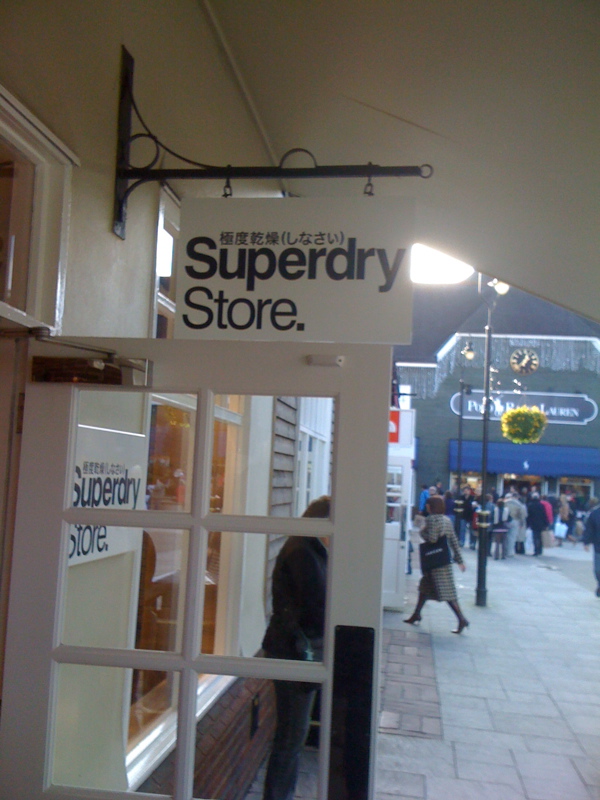
It was quite busy, which you’d expect, but there was only one store that had resorted to getting people to queue up to even get into it, and this was Superdry. It only opened on Wednesday last week and it has been rammed solid ever since. By making people queue they give the people inside a better shopping experience and create a scarcity marketing rumour that what is inside is soooo cool that you have to queue to even get to see it.
Finally getting to the front of the queue at the Bicester Outlet Village Superdry shop
Again it was 40% off list price throughout the store but starting from a lower price than the likes of Jack Wills, they started to look like immense value.
It seems that everything in Japan is cool for kids these days and Superdry is one of those brands that seems to inherently understand both scarcity marketing and offering great design with great value. It’s not surprising they are so popular.
So what did the kids buy?
It was no shock to me that the perception of Superdry being cooler than Jack Wills hit home (as it had a queue), so they spent all of their budget in there and are now giving us a hard time over not having the chosen presents until Christmas.
So does this mean that Superdry is the coolest brand in Britain?
It does for me, sitting here writing this in my new Superdry shirt! (yours for a bargain £20.99)
The old Woolworth’s in Nottingham, Victoria Centre is now the new Poundworld. It’s apparently the biggest they have, so I thought I’d have a look around it.
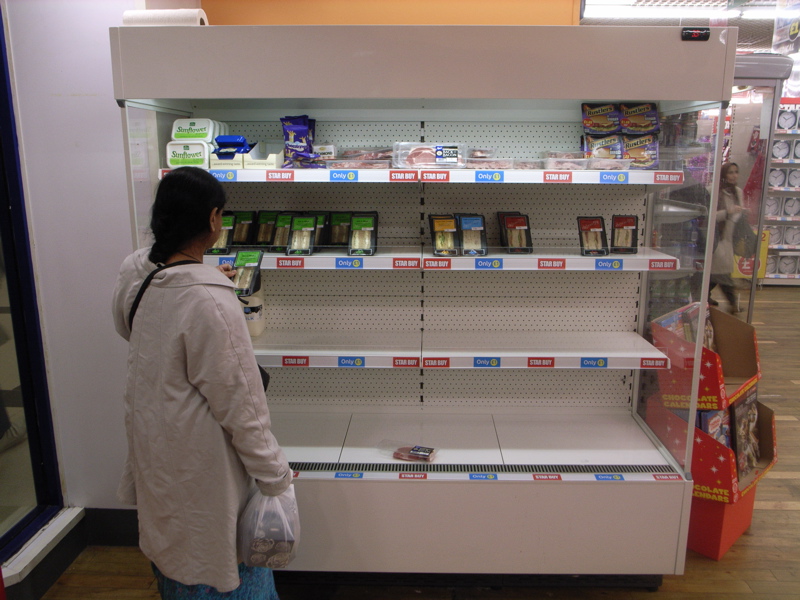
Most of their stock isn’t for me, but I guess I’m not their target audience. They have some great value Johnson and Johnson facewash and 3 cans of diet Cherry Coke – all for the bargain price of £1. They have electrical items, hygiene and bathrooms stuff and almost anything youcould possibly need to kit out the perfect value house. But what really surprised me was the fact that they have a chiller.
In this chiller are Richmond sausages, 2 litre packs of milk, back bacon (in slices of six), vile Rustlers burgers (priced up at £1.49!) and a sandwich selection that even includes Coronation Chicken on a brown bread – again, all for £1.00.
Is £1 the new battleground – Judging by their hideous sandwiches, I think not!
Purely in the interests of research, I bought one of their Tuna mayo sandwiches and can report that it was truly disgusting. I ate one half of one sandwich and threw the rest away. For a gannet like me who considers chiller grazing in garages as top fodder, this is highly unusual behaviour.
Greggs across the way however have a new offer of crusty cobs with ham or cheese at only £0.80 each or both for £1.55. Now these are lovely. Fresh, crusty, made in the store on the day and remarkable value.
I can honestly say, because the £1.00 sandwich was sooooo bad, that it will make me look with some deep suspicion at every other thing they sell too. Proof again that one bad brand experience can reflect badly on your entire branded offer. Don’t just look at some of the elements of what you do with your brand, Look at all of them.
So no, £1 isn’t the new battle ground. It’s £0.80.
Thanks to James Cridland for his Poundworld facia shot. You can see more of his stuff here.
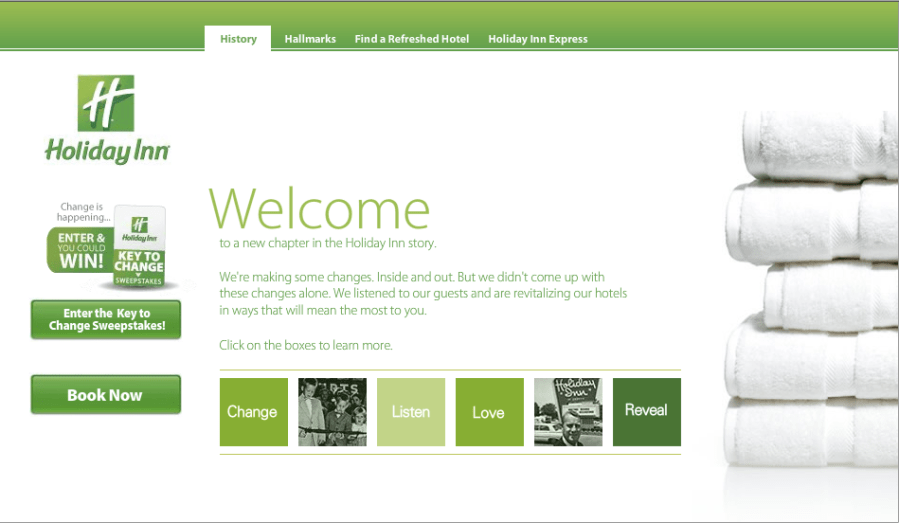
Holiday Inn rebrand – A rebrand borne out of listening to customers
In our role, we see an awful lot of rebrands and we see a lot of awful rebrands.
But not so the rebrand of Holiday Inn, which in my opinion is spectacularly good. It should be for $1billion though.
I’m not impressed because they have created a swish new logo, because the one they have created is only fine. It’s certainly not groundbreaking, particularly different or revolutionary, it’s just fine.
What they have done brilliantly however is redesign the branded experience by listening to their customers.
In their own (nicely crafted) words, they ‘Had a serious heart to heart with their guests – it was the biggest global dialogue that has ever happened in their category’
They are aiming to remind past present and lapsed customers, why they fell in love with them in the first place. Love is a great word in branding and its talked about a lot, but very rarely achieved. Only the real greats ever reach this status and we see them all over in Apple, Harley, Virgin, Sony and the other ‘Lovemarks’ brands.
They’ve taken control of the welcome, introduced (or reintroduced) friendly and efficient check in and even their signature sound and scent.
Wow.
How many brands control their sound and scent?
I stayed in the Holiday Inn, in Back Bay, Boston and the staff were already superb. It was the friendliest hotel we stayed in during our whistlestop US tour but I’ve yet to stay in one of the refreshed ones.
If they can deliver worldwide on this very bold and public promise, that will be one of the most truly outstatnding rebrands ever seen.
Updated
In this really interesting piece on the Wall Street Journal it would appear that Holiday Inn are again doing the right thing by enforcing the switch of their brand from old to new. If you don’t update to their new standards by the end of 2010 they will dump you.
This is where most rebrands or brand implementations fall over. It’s nearly always bad implementation or a lack of implementation altogether. There is clearly a major cost implication for the Holiday Inn franchisees of $150-250k and some will not be able to justify the expense. This will effectively get rid of up to 300 existing operators who will then be ‘debranded’ altogether.
This may be a bit of a rough way to treat your business partners, but it’s vital to remember that one single bad brand interaction can undermine the whole branded experience. By getting rid of these 300 or so, they will reduce the average age of their hotel stock by 11 years to only 15 years old. This is a major percentage change and one that will ensure a more consistent branded experience across the world.
I was impressed before and as I’m not one of those 300 operators under threat, i’m still impressed. I wonder how this will play out in the long term?
We worked out a schedule, I blogged that schedule and we hit that schedule. It’s a first and a wonderful first at that.
Today was a day of Iconography and infamy. Our first call saw me change my name to Cristol. A surprise to me, but my accent is clearly so hard to understand that when I gave my name to the lady behind the breakfast counter, she translated John to Cristol. As well as free name changes, the breakfast cafe were experts in sourdough sculpture as you can see from these assorted Alligators and crabs.
Our breakfast destination was a place that did sourdough and liked to make it into funny shapes
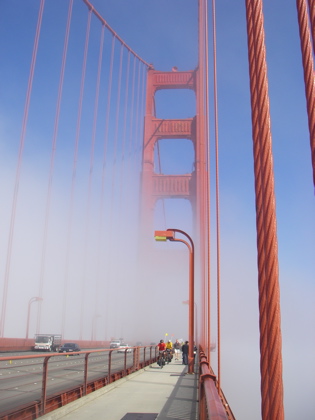
We headed for the Golden Gate Bridge with a huge sea mist rolling in under its spans. Its not golden, so I really don’t know why its called that, but it is enormously popular. In the time we were there, there had to be 200+ people walking the bridge and nearly as many cyclists. This was on a day when you literally couldn’t see the bridge apart from a few brief glimpses through the mist.
The Golden Gate Bridge, peeping through the mist
Designed by Irving Morrow, it has a central span of 1280m, and a height from the top of the tower to the water of 230m. That is seriously huge. the cables to hold it up are as big as a sewage pipe.
If you’re gonna use a cable to hold up the Golden Gate Bridge, use a big one
Built between 1933 and 1937, it links Marin County to San Francisco. The water underneath is very cold apparently and the temperature differential causes the now trademark fog, which is as common as the bad roads in the region. This freezing Pacific water is also the reason that Alcatraz is so hard to escape from. Freezing cold, combined with visibly strong currents gives it a menacing grace.
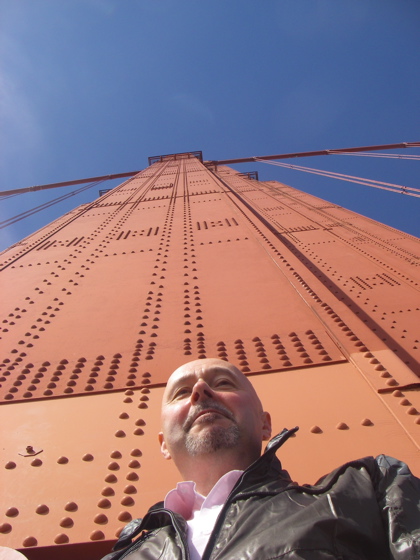
The sheriff of Nottingham under one of the huge Golden Gate towers
How have they commercialised it? Well, they haven’t really. No charge to walk over it, a tiny gift shop and an even tinier café. Bt even a taxi rank from which they can make money. I guess they appreciate that people come to the city for the view and enjoy all the rest if what it has to offer whilst they’re here.
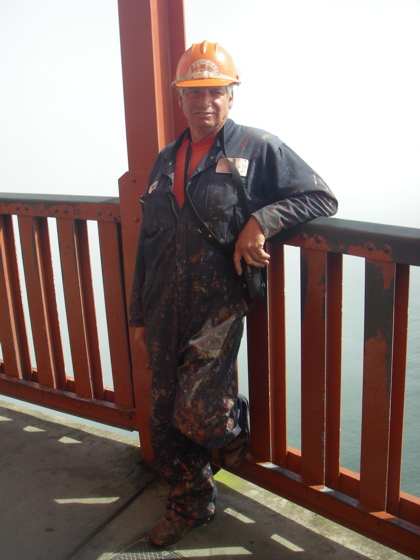
So what do we learn from this? Well iconic works. Why would that many people come to see and walk on a bridge that is just that – a bridge. Because it is beautiful spectacular and on view from almost every part of the city. It also has a team of 38 painters who work full time, just trying to keep the old girl looking at her best. We spoke to one of them, Michael who chatted to us in his break, whilst the bridge creaked, groaned and swayed in the strong wind.
Michael – One of 38 Golden Gate Bridge painters
We have written in numerous presentations about how much our city needs something iconic. A Swiss Re a Pompidou or a Golden Gate. Again, something world class, that draws people for the sake of it. To see it to walk across it, to walk underneath it and to be photographed with it for them to add it to their little list of tick box ‘must see’s’.
Global warming also isn’t an issue in San Francisco as everywhere you go, if they want to draw you in, they have burning patio heaters, or in this case a huge open air (and totally pointless) heater.
Global warming isn’t an issue in San Francisco
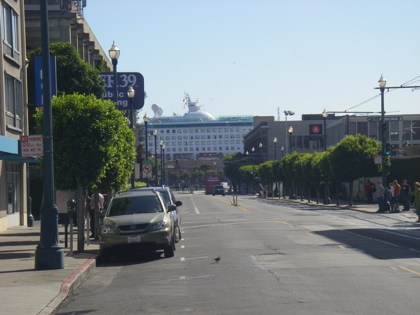
It’s also incredibly touristy in places. Looking along the road of the hotel we are staying at shows why. There are massive cruise ships stopping at the end of the road, unloading loads upon loads of twinset ridden tourist types.
A massive cruise ship at the end of our road
We had booked a trip across to Alcatraz Island. A state controlled ‘attraction’ that draws 1.3m visitors per year. For $26 you get as long on the island as you want (although last ferry home is 6.15pm and don’t be late. You get an audio tour, all sorts of other escape and famous convict tours and absolutely no food and drink. None. Not even a token bag of crisps. It’s not as though you can do a runner with it. I can only imagine this is a covenant thing that they’re not allowed to sell food. They have a captive audience that are spending 3-4 hours on an island and they have no food. Derrrrr. If you sold them food, by UK averages, you’d make an extra $7m a year.
Alcatraz, infamy and iconography all rolled into one enormous visitor attraction
The shop is pretty profitable, as it takes between $20-30k per day. That’s a good $7-10m per year. Add that to the $30m or so they are getting from the visitors fees and you have a very big business.
One of the nice things they did in the retail outlet was sell exclusive merchandise. Almost every shop in SF sells Alcatraz stuff, but most of what you can buy there, you can only buy there. Clever way to make more from a (hungry and bloody thirsty) captive and captivated audience. When I wrote about the Alcatraz brand a few months ago here, I had no idea that I would experience it myself so soon, but now I have.
The full force of the Alcatraz brand is used in all of the merchandise
One of the crap things they did however was try to sell you a terrible photo of yourself posing against a backdrop’ of the island. Not even a shot in the real cells, but against an awfully printed backdrop. They printed the film and then tried to get you but two 7×5 prints for $22. I hung about, but I didn’t see anyone buying any. Perhaps a lesser price or a bigger single print, or maybe even digital technology to avoid them having to print, may enhance what they do quite badly.
The Island itself is very engaging. An excellent 45 minute audio tour takes you on a personal and slightly isolated (as you wear headphones throughout) wander around the prison and a tiny part of the grounds. This tour uses the voices (or claimed voices) of four former inmates and four former warders. It uses sound effects to an excellent level and it caught the imagination of all ages from kids to grandparents.
We can’t do our own island in Nottingham, and we can’t do a boat ride in with views of the Golden Gate Bridge, but we just have to do an audio tour that catches people’s imagination like this.
We have Robin Hood, ghosts, caves and the story of the city itself. The technology they use is hardly break the bank stuff, but if it’s scripted right, we could manage the timings, the flow and the entire visitor experience for anyone from any country and with any interest.
The Alcatraz Audio Tour is powered by a clever little digital device with great sound quality
I don’t think that you would see this unless you saw it. This system of capturing and isolating the punter on the way through really works. Its not always comfortable, but we have to learn from this and ensure we use it to our advantage.
And so to Segway. Or City Segway Tours to be precise. Number one on Tripadvisor in San Francisco – and I’m not surprised. It was phenomenal.
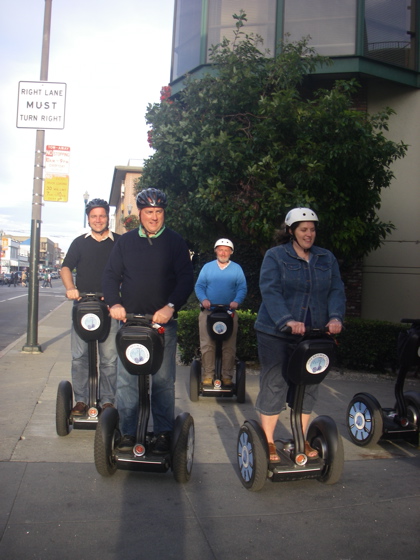
All aboard the Segway’s = the only way to travel
One of our party, Nick Hammond, summed it up by saying ‘it’s not often you get to do something that is totally new to you.’ And that’s it, its totally new. Very few will have ever ridden on a gyro balanced personal transportation device. When we got chatting to Pam, the proprietor, she said that they were ‘going gangbusters’. If this isn’t a huge part of the future of tourism i’d be amazed.
This is Pam, the owner of City Segway Tours SF
It was perhaps one of my highlights of the trip because (I am terribly geeky about technology) and I had wanted to have a go on one, since I first saw them on TV in 2002. I assumed it was an April fool or CGI because it looked so freakish, and I can now confirm that it is freakish, but also very easy to learn, master and enjoy.
Our tour, was beautifully managed by Larry, a publisher by day and Segway expert by night. It seems mad that having signed the biggest most wordy CDW, you are then allowed to take their $5k piece of kit on the open roads with ten minutes training and an ill fitting bike helmet – but this is the ludicrous situation of US law.
You can’t do a thing one minute without a lawyer, and you can hang of the side of a cable car and Segway the next. How does this stack up and who would want to pay their insurance? The waiver you sign, agreeing to pay the first $500 of any damage you may do to their kit does rather explain this, but who can blame them, or their insurers?
We rode around the town with Diane and Keren from South Dakota, with the group of us getting catcalls and questions from the walking public. It’s not an outing for a shy person as everyone watches you and children point, laugh and in one case, cry. Perhaps she thought we were alien robots?
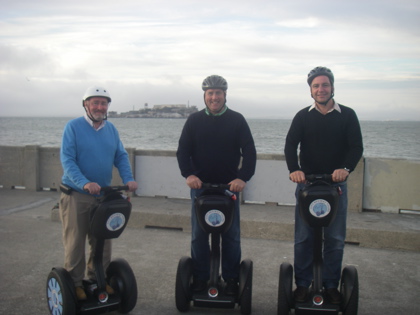
At the end of South Beach Pier with Alcatraz as a backdrop for our Segway’s
Pam described the value of their Tripadvsor placing as being central to what they do. To get to number one is hard, but to stay there is really hard. But there’s a reason they’re number one and that’s because they’re brilliant. Nothing was a problem and you weren’t a berk if you found it tricky.
We have to find a way to bring Segways to Nottingham. The hills in San Francisco are hillier than ours. The traffic lighter. A tour around the castle, the square and the park, is a sure fire winner, so I may be applying for a City Segway franchise as soon as we get home.
Anyway, Seattle tomorrow. Space Needle and the Rock and Roll Museum, that many rate as the best museum in the world. Its another very long day with only breakfast and lunch – due to the supersized standard portions) and another very late night, but San Francisco has been an incredible adventure that Nottingham just has to learn from.
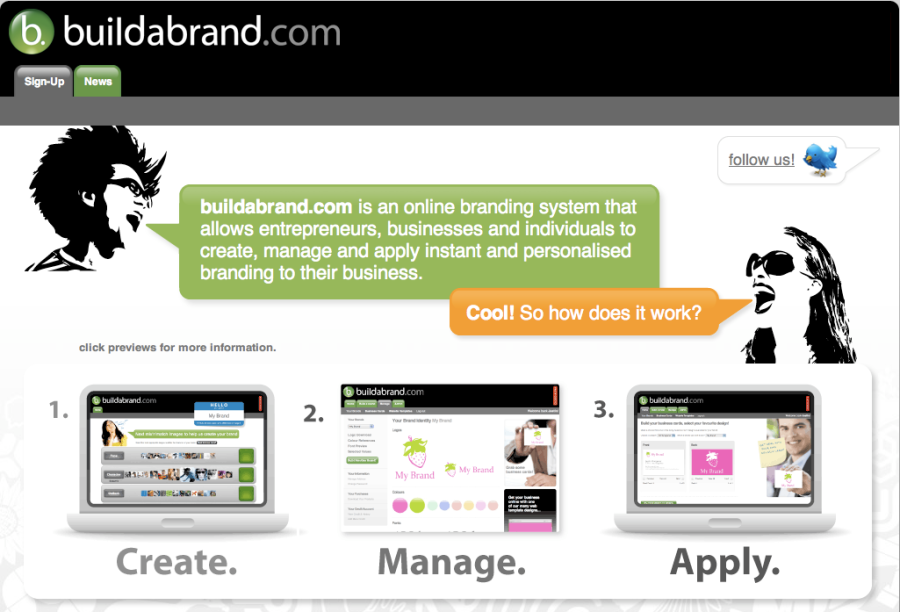
I noticed a huge number of Retweets in one of my followed areas about a new beta experiment called Buildabrand.
Buildabrand – automatically generated branding?
According to their own blurb, it’s ‘an online branding system that allows entrepreneurs, businesses and individuals to create, manage and apply instant and personalised branding to their business.’
Wow, that sounds clever. Maybe even too good to be true.
You tell it what your name and values are and then it automatically generates a brand for you.
So, referring back to my previous post about what branding was and what branding is, it clearly isn’t a system to build a brand, it’s a system to sell you merchandise with logos on it.
Ever the cynic about systems like this, I have registered to se whether it will generate a new brand for me or for Purple Circle, so I’ll let you know if I get ‘accepted’ into their beta programme.
It seems like it could be a progression from the plethora of $50 logo sites out there, but it certainly won’t generate you a brand or anything close to a brand using their automatically, powered ‘algorithms’. (A pseudonym for seeing which logo they have in stock which seems the least wrong when compared to your values)
Years ago, I was on a TV programme called Love at first sight, which was quite like a low rent Blind Date. The idea was that you said some comical things about yourself and then Cupid, the Love Computer matched you to one of the three lovely ladies in front of you. What actually happened was that you wrote down on a piece of card which one irritated you the least and if they picked you too, you won a prize.
I suspect that the Buildabrand algorithm uses similar technology.
Building a brand is far more than throwing a logo at a set of values. It’s about living them in everything you do and the logo showing people they have arrived at the branded experience.
UPDATED
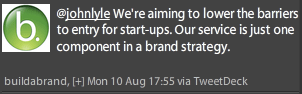
I added a link to this piece on Twitter and it obviously got picked up by the people at Buildabrand, who posted the following reply.
Buildabrand – reply via Tweetdeck
I think they do have a point in that they are lowering the barrier to entry for start-ups in that they may be able to produce decent logo design on the cheap. What they will not be able to do however is build a brand. They can possibly do one tiny element of what constitutes a brand.
My issue with this as a service is that they are claiming they can sell you something worth many thousands of £££’a for a few pence. Anyone who thinks they can shortcut their way to a brand is deluded.
Branding takes time effort and consistency, not throwing a few values into a computer and seeing what pops out.
UPDATED AGAIN
I have to give great credit to the people at Buildabrand in that they have clarified their position a little further in what is quite a brave piece directly responding to some of the criticisms that myself and others have levelled at them. You can read that here.
What they are now saying is that they are not trying to replicate what true branding agencies provide, but offering a low cost solution to those who need a quick and dirty logo for a project they are looking at but can’t afford to do properly. They say they have a bank of 1800 logo ‘solutions’ built up ready for the onslaught. Maybe I’m being unkind in saying that sounds remarkably like an adaptation of clipart (which is exactly what the likes of $50 logo do), but only time will tell.
I’ve applied for the beta, so lets see if I can get onto their scheme (now extended to 200 freebies from the original 50) and then set them a worthy challenge. I’ll let you be the judges, by sharing the results here – when and if I get selected. They are now following me on Twitter, so it will be a test for them to decide whether they want me as a customer.
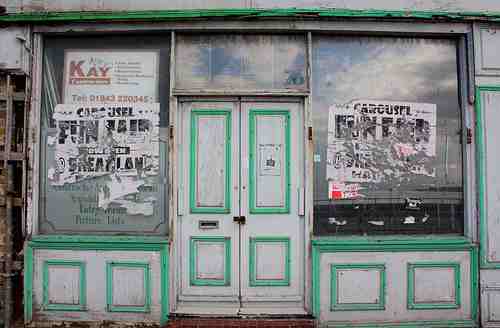
Empty shop in Margate – A chance for the independents
There was lots in the news on the BBC on Friday about the seaside town of Margate having the worst percentage of empty shops for any town in the UK with a 25% rate. This was closely followed by Derby, which for a major urban conurbation has an astonishing rate of 22%.
Now I know both of these places very well having grown up in Margate and have written about it both here and here, and I live within a few miles of Derby.
So I thought I was in a good place to comment on both places from a branding perspective and from a common sense perspective. The two are often quite separate and for me, this seems to have been the case in both of these examples.
So firstly Derby. It’s a compact city that has built it name on the back of engineering with Rolls Royce, and latterly Toyota and Bombardier. It used to have a lovely friendly small city vibe to it but was always slightly ‘chippy’ about its relationship with Nottingham, just a few miles along the A52. It seemed to spend more time looking at what Nottingham was doing and trying to compare itself favourably to it, rather than looking at organising its own offer. It has been branded as the city of the future, Derby yes and I don’t know how many other silly place branding attempts. All have failed to capture what is great about the city, which, for an outsider looking in, is that it is easy to get around, friendly, very good looking in places and quite nice to live or even shop in.
So when they announced the huge new Westfield development, it was almost like they had got off with the best looking girl at the school disco. Nottingham and Leicester looked on jealously as to what massive wealth this new shopping mecca would bring them. But unlike with the retailer, Wilko’s you can’t always polish a turd.
I’m not saying Derby is a turd per se, but I am saying that what they did was built a huge great homogenous monstrosity in the heart of a lovely city that had no connection with the city itself. They built an out of town soulless shopping experience in the heart of a city that was full of soul. It had no connections to the outside world. They drew their best retailers from the streets into the centre and in doing so, pulled out its heart. They forgot what made Derby both different and great and with 22% of their shops empty, are now reaping the rewards of their greed, stupidity and short sightedness.
The story with Margate is remarkably similar. A lovely little east Kent seaside town that had lost its sparkle, become the home to bail hostels and low end living and with its obvious lack of investment over the previous few years saw huge ££££ signs ringing in front of its eyes when they allowed Land Securities to build the monstrous Westwood Cross between its main towns of Margate, Ramsgate and Broadstairs.
Again, they dragged the heart out of the towns, Margate suffered most as it was already in decline anyway, but all saw their multiple retailers leaving in droves to create even more homogenised and soulless developments for us to travel to and endure.
But in recessionary times, we all seem to work out that you can only own so much stuff and then it has to stop. Well, we stopped.
I am convinced that brands have to fight back by being different, not by being homogenised. I don’t want to look like the next person in the street, I want to look like me.
The future of branding is unbranded.
So the towns and cities need to fight back. Not through another pointless rebrand that will just get the local people and the local papers baying for blood, but by deciding what they stand for and then offering real incentives to drive the right people to deliver that into place.
If you want independent retailers, then the councils have to be flexible. Why not offer them rent free periods or even licenses rather than onerous long leases that scare the start ups away. If you are thinking about starting a small business, would you feel comfortable about immediately signing a lease that commits you to five years of rent payments whether it works out or not? No me neither.
Business rates could help too. At present, any business pays 48.5p for every £1.00 of assumed rental value in its business rates. So if it’s arbitrarily decided that your space should be rented at £10,000 per year, you would have to pay £4850 in business rates over and above any rental or lease payments. But again, in recessionary times, this space is worth nowhere near what it has been in the past, so there needs to be a huge degree of flexibility exercised here. If landlords are having to take almost zero rent to get retailers back into spaces, surely the rates should be calculated on what they actually pay, rather than what they should be paying in some imaginary, ideal world economy?
Margate and Derby have a glut of retail space, so they need to make it incredibly attractive to independents to come along and give it a go, without the huge downside risk they would normally face, so that independently minded people will come back and begin to shop there. In my mind, only something as radical as this will get the spaces trading again. No amount of art in the windows will do this, but all credit to Margate for starting to make empty shops at least look more attractive.
Margate shop window art – an imaginative use of empty retail spaces
Empty spaces are self perpetuating. Fewer people will take the risks of setting up and as such, fewer people come to their to shop in the first place.
As with any recession, this is a chance for Derby and Margate to define their character. They have already sold their souls and found that it isn’t as great or profitable an experience as they once hoped. Lets hope they take this chance now to recover their fighting and independent spirit and maybe even save their souls.
Thanks to Melita Dennett for the Margate empty shop shot. More great work from her here. And to Maggie 224 for the Margate art shop – More of her work here
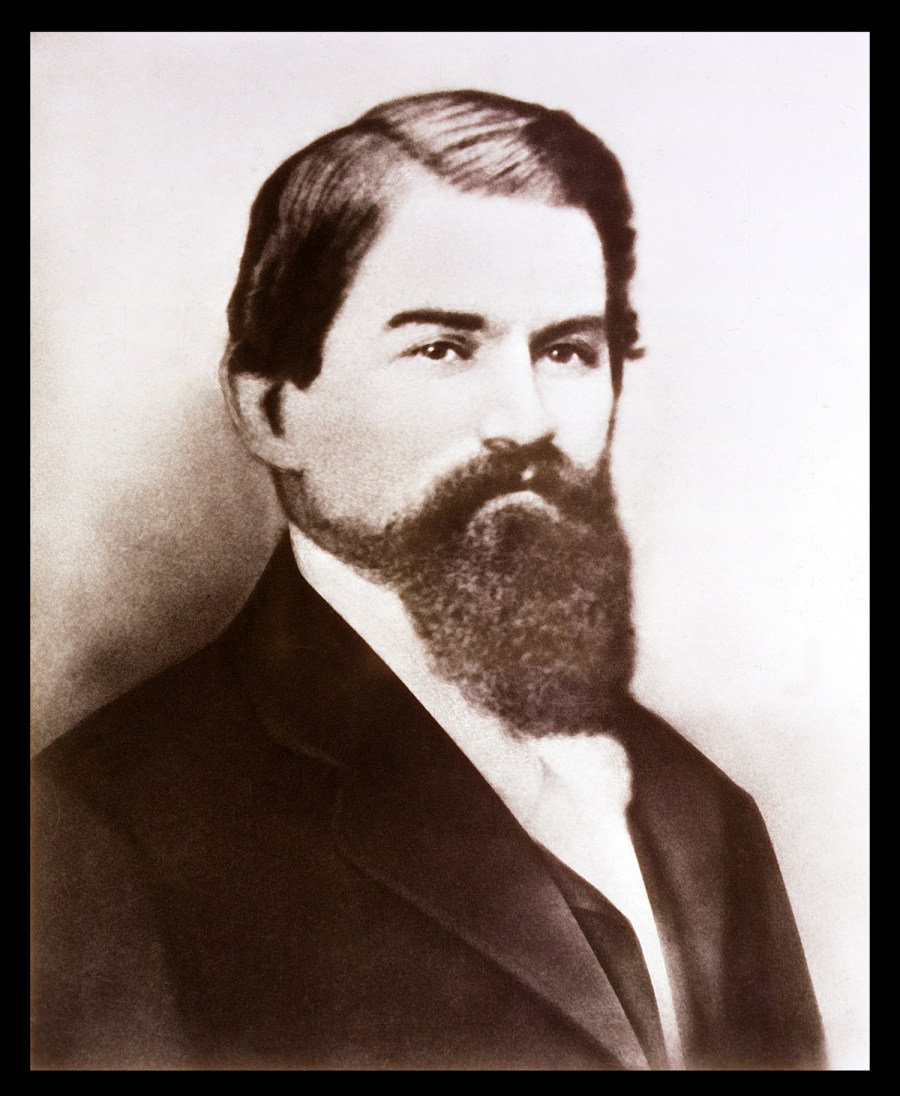
Dr John Stith Pemberton – Gave birth to Coca Cola and started the Cola Wars
On May 8th 1886, a Dr John Stith Pemberton, a pharmacist, gave birth to the Cola Wars when he made a new syrup for the original Coca Cola and sold it down the road at Jacobs pharmacy. It was many years before it became the enormously powerful brand it is today.
What is one of the most interesting points for me however is that the logo element was actually produced by his bookkeeper who thought he could see something in the proximity of the two C’s and with his own scripted handwriting, created the logo for use in the Atlanta Journal to invite the citizens to try their new refreshing beverage. As you can see, this ‘logo’ is almost the same as the one we see today.
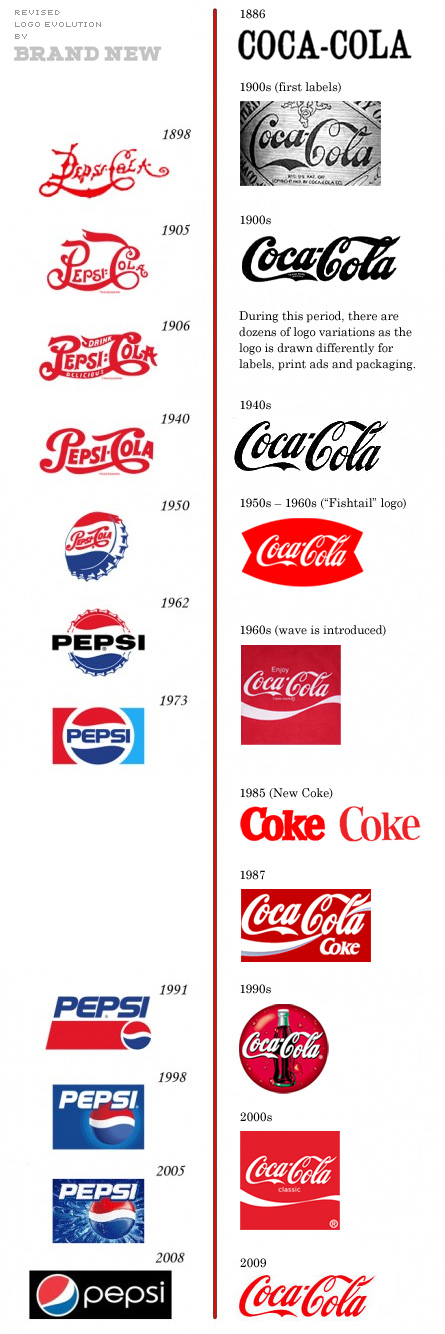
Meanwhile in 1898, over in New Bern, North Carolina, Pepsi was invented by another pharmacist Caleb Bradham. It was originally launched as Brad’s drink, but later became Pepsi Cola, named after the two main ingredients of Pepsin, the digestive enzyme and Kola nuts. Again it was aimed at a market looking for a refreshing drink that had some beneficial effects. The logos at this point are strikingly similar, to the point of Pepsi’s looking remarkably like a copy of Coke’s.
But around about here, their stories seem to split. Coca Cola stuck to their mission and continued to modernise to reflect the needs and desires of the era by changing the context of their traditional logo. Pepsi on the other hand, tried to modernise by constantly changing the logo and the context.
Pepsi and Coke logos throughout their history
In the 1980’s, during the time of Roger Enrico’s stewardship, Pepsi became convinced that their difference was their taste, spending the next ten years promoting just this one point and may even have been the reason that Coke, changed their recipe to one of their few historical mistakes that is ‘New Coke’. You can read a bit more about this here.
But by constantly trying to change everything about their product to appeal to become the choice of the (next) new generation, Pepsi effectively created a continual churn of their existing customers. The Pepsi logo that seems most relevant to me is the one from 1973 and the one for my kids will probably become the one from 2005.
The lesson here is simple. Coca Cola are the market leader and have been throughout their history. They have done this by continuing to build on their original values. The logo has evolved, but never changed so radically that it will lose its connection with the previous generation. Because of this brand continuity, Coca Cola will always mean something similar to each of us.
If you blind taste test Cola from Aldi at £0.25 per bottle and compare it to Coke at £1.09 per bottle, they are not that different, so like I said with the branding of cigarettes, it has to be to do with the brand that is the difference, or we would always buy the cheaper alternative. We don’t though, because the branded values dribble down on us and give us a bit of their magic.
Branding is not about logos, it’s about the consistent delivery of values to allow you to gain a feeling or emotion from it. The logo is only the symbol to show you have arrived at that branded experience.
The logo is therefore not the most important element of any brand, it’s the continual reinforcement of those values.
Pepsi’s mistake has been that by constantly changing the logo, they have changed the symbol of arrival.
As such, every time they change it, they create a level of uncertainty in a potential customer, rather like going into a pub or office you don’t know, that it may not be to your taste. You will naturally ask yourself ‘Will it be the Pepsi I know? Or have they changed it to make it more relevant to a new more exciting and younger audience? Will I look silly if I drink it? My very own equivalent of dad dancing in the wrong room.
Changing logos is a mistake, that Pepsi have practiced for year after year after year. For me, this is why they will always be trying to follow Coca Cola’s lead.
UPDATED
It would appear from new information that my previous chart showing the branding of Pepsi v. Coke through the ages was wrong. Shock Horror, they have actually changed the logo over the years. Not much, but still amazingly consistent considering the length of time.
It’s been announced that Coca Cola are undergoing a radical new look and feel again. What is really interesting to me in this is that their idea of a radical rethink is to move some of the colouring around on their trademark bottles and cans. They are still leaving the logo element of the brand almost completely untouched as they have done throughout their entire history.
Coke updated bottles April 2106Coke updated cans April 2016
I read a great article on Brand Strategy Insider entitled ‘Customer Experience Defining Value In Retail’ Where the writer gives a great example as to how he can tell whether a restaurant is in trouble. He claims they get rid of the rustic rolls in favour of a more ‘stock’ white item.
In the grand scheme of things, this may not seem like much of a change, but for someone who knows what they are looking at, it is a strong signal that things are going from bad to worse.
A similar thing happened to us at the weekend. We were 12 miles into our 15 mile walk and the Apple Tree Pub (Part of the Ember Inns Chain) appeared before us, beckoning us in for lunch and a welcoming pint. And then we saw the sign – two meals for £7 Mon-Sat 12-5pm – surely a brilliant idea?
So we thought we may as well give it a go. Two naked chicken burgers sounded good and we’d earned our calories with the walk. A couple of pints of Mansfield bitter also sounded nice. Now when the food came (really very quickly) it was as badly presented as any food as I’ve ever seen.
The food itself was lovely. Well cooked chicken, fresh bun, clean chips and clean plate. But that was it. Not even a hint of a salad garnish. Perhaps this was the naked part? By missing that off they made it feel like a fast food dish rather than a great value pub meal. At that price it could compete with any McDonalds or Burger King any day, but it didn’t give you that warm feeling of ambience from a pub, just that slightly grubby feeling you get if you accidentally succumb to fast food hell.
It sounds like I’m really nit picking – and that’s because I am.
Ember Inns is one of the many brands in the Mitchells and Butler stable and they should know better. They own All Bar One, Harvester, Toby Vintage Inns and many more.
Little cuts in service or quality are ALWAYS detected by clients in the end. You may think you’re getting away with it and no-one will notice.
Niall Fitzgerald, the former Chairman of Unilever said that he has sat through hundreds of presentations where researchers and analysts insist that customers will not notice if you make this change or that small tweak, but they do. They always do.
And we tend to tell others about it too.
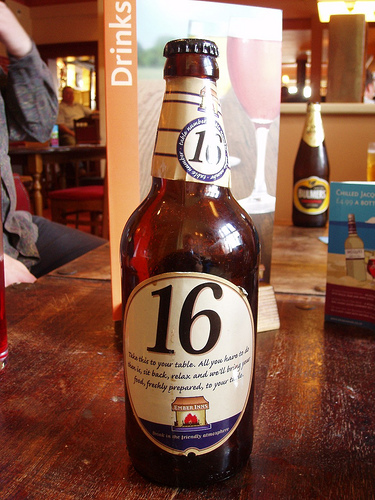
Thanks To Ewan M for the use of his Ember Inns bottle table marker image
The Far Tree at BeWILDerwood – A truly embedded brand
Exceptional branding is about creating and controlling every single element of the customer experience. The way you put these elements together is the way you are. It is you. It is what, who and why you are. It is your brand.
Branding is a way of being, a way of thinking and your way.
Wolff Olins, the agency that are widely seen as the creators of modern branding describe it as creating the situation where you become ‘one of one’ and not one of many. You become unique in your own market.
Bill Schley in his book ‘Why Johnny Can’t brand’, takes this a little further. He says that to create a brand, this could, or maybe even should, be in a market you have invented yourself in order to allow you to differentiate yourself clearly. More of this in bit.
The Cambridge Advanced Learner’s Dictionary has a rather different and remarkably narrow view on what constitutes a brand. To us it appears out of date and well wide of the mark of where current thinking is based.
branding
noun [U]
The act of giving a company a particular design or symbol in order to advertise its products and services:
Example. ‘The successful branding and marketing of the new beer has already boosted sales and increased profits.’
I’m afraid I take a different view again. A brand to me is a way of being, not just a new style of advertising and packaging.
Its more than the way you act, it’s the way that you are.
The dictionary view may be that it links to the marketing of a product, for me, its intrinsically linked to the whole outlook of the organisation. It sets the entire agenda for how the marketing should begin to behave. It is most definitely NOT just the ‘prettying up’ of the advertising and packaging.
Virgin, Nike and Google, to name but three, are not just about clever marketing. They are about being built on a brilliant basis throughout every possible touchpoint.
They set an agenda for how their brand should be perceived and work incredibly hard to ensure that wherever anyone comes into contact with them, they will get the correct Virgin, Nike or Google experience. What makes it even more exceptional with these three is that they are not even that paranoid about the logo being consistently used.
I think we can all get a little distracted by brands and branding. Convinced of our own brilliance and self glorifying world that creating a quirky little logo will have the punters pouring in.
Well I’m here to dispel that rumour. It won’t.
A good logo on its own will not win you a single customer. Not one.
A bad one can however, stop you even being considered for calling up.
Bad logos are hateful, every designers worst nightmare and we love the glow from great work. Peer respect is important in almost every industry and we all feel good when our work is rated.
But it’s the product that really matters, branded or not.
If the product works and people feel comfortable with owning in – no proud to own it – no even delighted to give you their custom and eulogise to their friends about how great it is, then you know you have a potential winner.
So here’s one for you. Which search product is better?
Bing – Microsoft’s new baby Google – the worlds most dominant search provider Yahoo – yeah, remember them?
Well now you can see, in a blind test. Judging only by the efficacy of the product. How quickly did it give me exactly the answer I was looking for, how efficiently my problem was solved or how painless the experience was.
It comes from a very clever man called Michael Kordahi who has his own blog here.
It means the branding is irrelevant and you have to choose on the results.
Now I will add the caveat here that blind testing is not always a faithful predictor of what you are going to do in future. Martin Lindstrom in his book Buyology massively disproved that, but it will make you think.
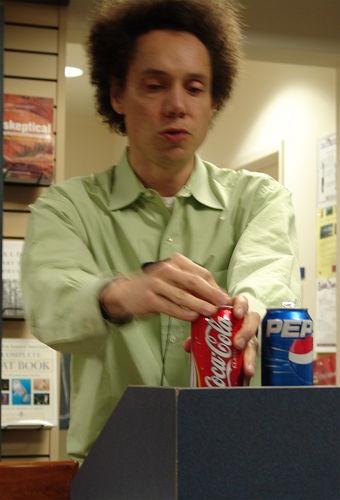
Now Pepsi also tried this with their own taste tests. For years they proclaimed that people preferred the taste of their brown fizzy water over Coke’s but it still didn’t translate into long lasting sales. (although it did prompt the launching of ‘New Coke’ if Roger Enrico the former Pepsi CEO is to be believed.) Latest thinking shows this is more to do with it being a sweeter drink (which is easier to like in small quantities) than it actually being preferred as a long term brand ‘friend’.
Anyway, try it for yourself. See which you think really works, brand or no brand.
Thanks to Niall Kennedy, for the use of the Malcolm Gladwell (my hero) Pepsi v Coke image













 Johnny Lyle's new brand thinking