118 800 – A FAILED and hateful piece of opportunism

I was in the car the other day when I heard about a new service, which was effectively a directory enquiries for mobile numbers in the UK under the name (or number) of 118 800. It claimed to have some 15 million numbers in its database, which whilst not all of the mobiles is an awful lot.

The BBC interviewers were giving Shona Forster, 118 800’s Marketing Director a deserved hard time about the fact that you had to go onto their site to get yourself removed from the database. She was literally squirming! All the callers and texters were unanimous in hating this intrusion.

Connectivity, who own the 118 800 service said they had bought the numbers on the open market from people who had (perhaps accidentally) opted in to allow their number to be shared with ‘third party partners’.

Well, I’m sure we’ve all added our mobile numbers to the odd form over the years and few of us would want that number published – or worse still, sold – to the world.

Well, I just checked back and it seems that its now been suspended as a service. According to an article in the Inquirer it would appear that the system has crashed. Not through the huge demand for the service, but because of the huge demand for people to get themselves off their database!

Good.

Brands have to be built on selling the truth. On real and sustainable values, not nasty and slightly sneaky ones like this.

I wish it every possible failure.
Now its Design Week that’s a bit full of shite!

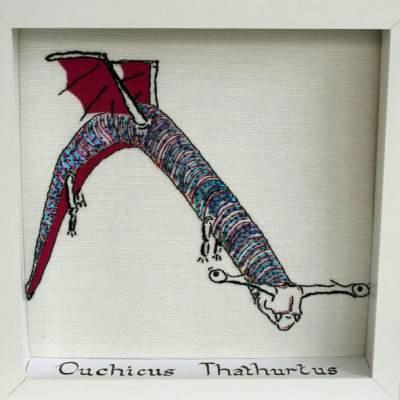
A flying penis dragon with wings

A few weeks ago, I wrote an article about a brilliant new t-shirt that had written on the front ‘Graphic designers are full of shit’. I did temper this by saying that I felt it only applied to some of them.

Well, at a star-studded awards presentation on July 8th, the leading magazine for our industry Design Week seems to be trying to prove my point to be just a little bit accurate.

They are showcasing the work of Nottingham Trent University graduate Ruth Ashton who has won the New Designers One Year On award with a ridiculous piece of art.

You can read the article here.

I asked everyone in our own studio what they thought and it ranged from ‘not my cup of tea’ at the most flattering end, to it being ‘utter shite’ at the other.

I haven’t seen all of Ruth’s work, so it is perhaps unfair of me to comment, but judging by this embroidered penis dragon with wings that allegedly hurts, I’m not sure where the design industry is going. More to the point, I’m worried if this is the type of work our industry elders are judging as the best of the best.

The prize was awarded by the former rector of the Royal College of Art, Professor Sir Christopher Frayling. This is the real problem, we are confusing design with art.

Design for me is work with a potentially commercial purpose to meet and hopefully exceed a brief. Art is an expression of one’s self or of one’s art and never the twain shall meet.

Speaking on Radio Nottingham about the rise of Twitter

My Twitter page
My Twitter page

I did an interview with Tarah Welsh of radio Nottingham yesterday that went out this morning at about 07.45 to all the lovely people of Nottingham waking up to me talking at them about Twitter.

You can hear the interview here My bit starts at 1.44.40 into the programme so you don’t have to listen to the whole thing. Its only live on BBC iPlayer for seven days though.

I am already have the mickey taken out of me for mentioning Philip Schofield, so  i’d like to go on the record and say once and for all that I do not follow him, stalk him or know him!

The interesting thing for me is how I came to hear of the programme doing a feature on the subject. I actually picked it up on Tweetdeck where I have an open search on the word Nottingham to see if anyone is saying anything about our fair city and someone else was saying they had just been interviewed by Tarah. So I rang her up and pretty much talked her into interviewing me.

Twitter has the potential to be an amazing resource for business and I did a talk last week to a firm of licensing solicitors all about the subject called ‘Welcome to online Hell’ which was very well received.

To quote Jeremy Allen of Poppleston Allen who I did the talk for “Your seminar on “Welcome to On-line Hell” was absolutely riveting as well as being very informative. We thought we were actually quite good at utilising the internet but after hearing your talk we realised that we are a long way from where we ought to be. I was particularly interested in the reaction of some of the younger members who always thought themselves more up to date than others. They were riveted during your talk and still discussing it now.”

If you’d like me to bring that talk to your own business or conference, give me a call.

What is branding?

The Far Tree at BeWILDerwood - A truly embedded brand
The Far Tree at BeWILDerwood – A truly embedded brand

Exceptional branding is about creating and controlling every single element of the customer experience. The way you put these elements together is the way you are. It is you. It is what, who and why you are. It is your brand.

Branding is a way of being, a way of thinking and your way.

Wolff Olins, the agency that are widely seen as the creators of modern branding describe it as creating the situation where you become ‘one of one’ and not one of many. You become unique in your own market.

Bill Schley in his book ‘Why Johnny Can’t brand’, takes this a little further. He says that to create a brand, this could, or maybe even should, be in a market you have invented yourself in order to allow you to differentiate yourself clearly. More of this in bit.

The Cambridge Advanced Learner’s Dictionary has a rather different and remarkably narrow view on what constitutes a brand. To us it appears out of date and well wide of the mark of where current thinking is based.

branding
noun [U]
The act of giving a company a particular design or symbol in order to advertise its products and services:
Example. ‘The successful branding and marketing of the new beer has already boosted sales and increased profits.’

I’m afraid I take a different view again. A brand to me is a way of being, not just a new style of advertising and packaging.

Its more than the way you act, it’s the way that you are.

The dictionary view may be that it links to the marketing of a product, for me, its intrinsically linked to the whole outlook of the organisation. It sets the entire agenda for how the marketing should begin to behave. It is most definitely NOT just the ‘prettying up’ of the advertising and packaging.

Virgin, Nike and Google, to name but three, are not just about clever marketing. They are about being built on a brilliant basis throughout every possible touchpoint.

They set an agenda for how their brand should be perceived and work incredibly hard to ensure that wherever anyone comes into contact with them, they will get the correct Virgin, Nike or Google experience. What makes it even more exceptional with these three is that they are not even that paranoid about the logo being consistently used.

Perhaps there’s a lesson in this for all of us?

Innocent Smoothies ‘A Book About Innocent: Our Story and Some Things We’ve Learned – Book review

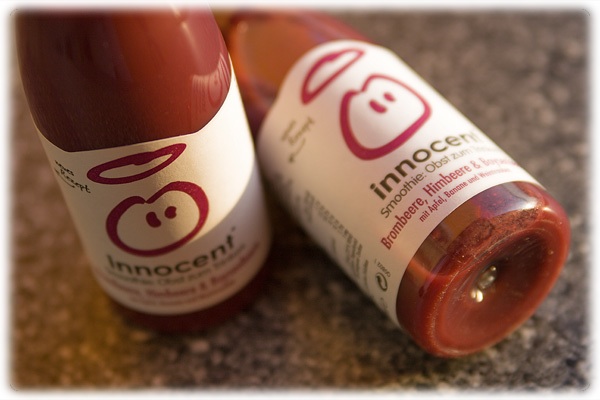
Innocent smoothies - everything you need to know about branding

There are few books that I have ever read that I have enjoyed more than this, because it is so obviously living its own values throughout every single element of the presentation.

From the beautiful simple writing to the clear, friendly design, it is a must read for anyone who wants to truly understand what branding is really about – from the masters of what branding is all about.

So what are the key learnings for me that came from reading and really thinking about what they are saying. Well, there are lots of them, but these are my top ten which made a real and lasting impression.

1. You don’t need masses of experience to start a business, but you do need an awful lot of determination and a brilliantly differentiated idea.

2. If you don’t get it right first time, it is not a failure, it is a potential lesson on the way to getting the right answer.

3. The beauty is in the detail. Its easy to do the big things right, but the differentiation comes in the small stuff that no-one else does like you.

4. Create a set of values that you really believe in and then deliver them ruthlessly at every single level of the organisation. Have fun, you spend a lot of time at work.

5. Recruit and retain brilliant people, even if they are not the same as you, but make sure you have a clear role definition for all of them.

6. Give people real responsibility to manage their own areas and then measure them on that. If they don’t measure up, help them move on.

7. Profit is not a dirty word, it allows you to continue to do more of what you do and live your values even more clearly.

8. Keep listening as you aren’t learning if you are talking. Look for inspiration everywhere, however random.

9. Keep evolving as a business as if you stand still you will slowly die.

10. Try new stuff. It may well work. If it does, do more of it.

Overall, this is a superb book that I found myself actually slowing down on whilst I was reading it so I wouldn’t finish it too quick.

Brilliant, just brilliant. You can buy your very own copy (and I urge you to do so, by clicking here.

And finally, thanks to the rather excellent ViZZZual.com for use of his image.

My new friend Rowena

Oh, and when you read it, look out for my new friend Rowena who is the very smiley one on the Banana phone in the front of the book. Hello.

How to create devoted customers

A very good friend and colleague of ours (currently honeymooning in New York and still blogging) has written a brilliant little presentation that he has published on Slideshare about how to create devoted customers.

I love the logic.

Delighted just isn’t good enough, because when (or if) they come back for me, they already have high expectations and to really win them over you need to deliver even more next time, or they will just be satisfied.

It’s the challenge facing any company, any brand and in effect any employee. How do you keep raising your game, so you don’t get overtaken by the next big thing.

A really simple line of wisdom that I have quoted before from Tony parsons in his book Man and Wife, where he is speaking to his Mum to understand how his Dad and her had managed to stay married for so long, where she says “you have to keep falling in love over and over again”.

If you don’t take this seriously as a brand owner, pretty soon, your customers will fall out of love with you and the devotion will be gone.

An Innocent tale – Updated

A little bit of Innocent fun

I’m reading the rather excellent book about Inocent Smoothies called ‘A Book About Innocent: Our Story and Some Things We’ve Learned’ Which is absolutely excellent and really confirms many of our thoughts about how real branding works. There seems to be so much power in the detail that they take seriously that anyone in any industry can learn from reading this enjoyable book.

I’ll write a full review in the next few days when I’ve finished it, but had to relay one of the brilliant stories in it.

Innocent often put ‘joke’ ingredients in their listings and on one, they added the odd ingredient of ‘Two Plump Nuns’. This was designed to show their purity and innocence – a lovely and funny thought – but really not one to be taken too seriously – who would really be thinking there was bits of nun in it, plump or otherwise?

But not according to the Trading Standards people, who after some to-ing and fro-ing wrote them a letter that essentially said “either you add in two plump nuns to your smoothies, or take them off your ingredients list.

Brilliant.

You can buy it here and I would absolutely recommend you do.

Latest news update
I bought a bottle of the superfruit smoothie today which was lovely and has a brilliant story about the bees knees on the side, so I thought I would write and let them know how much I enjoyed it and how much I was enjoying the book.

So I wrote and said “Afternoon

I just wanted to say I love your bee story on the side of your bottle. And I am loving your book so much, I was forced to blog midway through it about the Plump Nuns

https://johnnylyle.co.uk/2009/07/07/an-innocent-tale/

Thanks for helping me with a lovely healthy lunch

Cheers John”

and then only eight (yes 8, go on count them) minutes later I had a very nice reply from a lady called Rowena which read

“Hello John,

Thanks for your e-mail. Great to hear how much you’re enjoying having a read of our book and the Plump Nuns story. Hope you like the rest of the book too.

All the best,

Row”

Now I guess I was expecting a reply, but a personal one in 8 minutes is exceptional and the reason they are such a fabulous business ad a brand that any sensible business should envy and learn from. I am now a devoted fan!

‘Who moved my cheese’ by Dr Spencer Johnson book review

You need to be a fast mouse to catch the moving cheese

What an amazingly simple little book this is. I was expecting to hate it and having read the first few pages, I knew I was going to hate it, but the beauty of this book is its sheer simplicity.

It’s a tale of two mice and two little people who discover a huge supply of cheese and proceed to stuff their faces with it until it runs out.

Obviously there’s a moral to the story that relates to a more general business context.

The two wise ones, realised the cheese was running out and working together, moved on before the supply had completely run dry. The slightly less dim one realised that perhaps the cheese supply had been running a bit light, and was not as fresh as before and he had perhaps been taking it easy for a while. Luckily he moved on before he lost everything and after lots of hard work, found a new supply that was even better than before.

Only the really dim one lost everything. He refused to believe the cheese had gone (ie the market had moved on) blamed everyone else for it moving and essentially sat in place sulking about how unfair it all was. He insisted that someone had moved his cheese.

The parallels with industry are obvious and strikingly simple. For a 30 minute read, it has to be worth a go.

There are so many markets been lost and found these days in such an incredibly short time, its getting harder and harder to spot who moved the cheese and where its gone.

But after 18 years of running a design business, we’ve chased a lot of new cheese and thankfully caught it so far. When it moves again, after reading this, I’ll be quicker still to react.

You can buy your very own copy of the book Who Moved my Cheese by Dr Spencer Johnson from Amazon here

Thanks to MVA for the lovely mouse pic. You can see his work here.

What you need to ask in order to create brand that really works in the words of Rudyard Kipling.

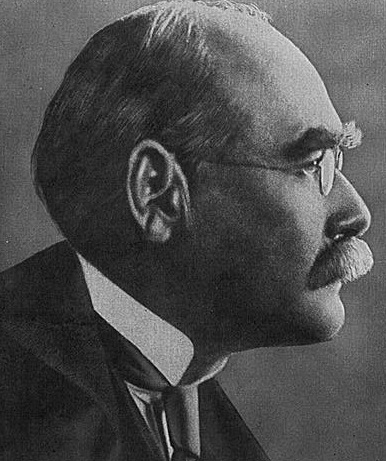
Rudyard Kipling - Six wise questions to create your brand

The Elephant’s Child

I KEEP six honest serving-men
(They taught me all I knew);
Their names are What and Why and When
And How and Where and Who.
I send them over land and sea,
I send them east and west;
But after they have worked for me,
I give them all a rest.

I let them rest from nine till five,
For I am busy then,
As well as breakfast, lunch, and tea,
For they are hungry men.
But different folk have different views;
I know a person small-
She keeps ten million serving-men,
Who get no rest at all!

She sends’em abroad on her own affairs,
From the second she opens her eyes-
One million Hows, two million Wheres,
And seven million Whys!

In short, if you are branding, thinking of branding or looking at rebranding, act like the Elephant’s Child and ask the six wise questions. If you do this, you can create a brand that is differentiated enough to really work.

Ignore it at your peril.

There’s no such thing as a stupid question, it’s just stupid not to ask them.

It’s not about branding – it’s the product

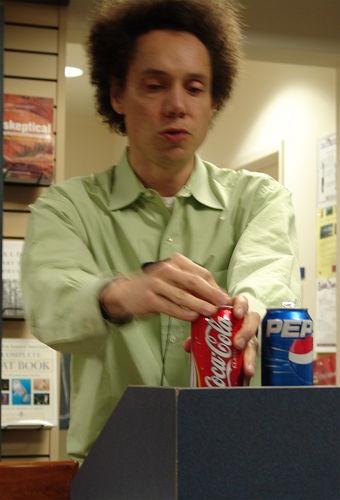
Malcolm Gladwell chooses between Pepsi and Coke?

I think we can all get a little distracted by brands and branding. Convinced of our own brilliance and self glorifying world that creating a quirky little logo will have the punters pouring in.

Well I’m here to dispel that rumour. It won’t.

A good logo on its own will not win you a single customer. Not one.

A bad one can however, stop you even being considered for calling up.

Bad logos are hateful, every designers worst nightmare and we love the glow from great work. Peer respect is important in almost every industry and we all feel good when our work is rated.

But it’s the product that really matters, branded or not.

If the product works and people feel comfortable with owning in – no proud to own it – no even delighted to give you their custom and eulogise to their friends about how great it is, then you know you have a potential winner.

So here’s one for you. Which search product is better?

Bing – Microsoft’s new baby
Google – the worlds most dominant search provider
Yahoo – yeah, remember them?

Well now you can see, in a blind test. Judging only by the efficacy of the product. How quickly did it give me exactly the answer I was looking for, how efficiently my problem was solved or how painless the experience was.

Try it for yourself with this Blind search tool.

It comes from a very clever man called Michael Kordahi who has his own blog here.

It means the branding is irrelevant and you have to choose on the results.

Now I will add the caveat here that blind testing is not always a faithful predictor of what you are going to do in future. Martin Lindstrom in his book Buyology massively disproved that, but it will make you think.

Now Pepsi also tried this with their own taste tests. For years they proclaimed that people preferred the taste of their brown fizzy water over Coke’s but it still didn’t translate into long lasting sales. (although it did prompt the launching of ‘New Coke’ if Roger Enrico the former Pepsi CEO is to be believed.) Latest thinking shows this is more to do with it being a sweeter drink (which is easier to like in small quantities) than it actually being preferred as a long term brand ‘friend’.

Anyway, try it for yourself. See which you think really works, brand or no brand.

Thanks to Niall Kennedy, for the use of the Malcolm Gladwell (my hero) Pepsi v Coke image