The world’s best branding – a thought piece with video evidence

What does ‘best’ mean in a branding context? And is ‘best’ a defensible position or one you should even think about using as a claim?

Is it plausible, does it differentiate and is is it sustainable?

These would be three questions we would ask when we were looking at any strapline to work with, or support a brand and for us, in most cases. Best is just not good enough.

Case 1 – Seattle’s Best Coffee

As already discussed here, I think this is impossible to prove and almost completely implausible when they are faced with the might of Starbucks on their doorstep. I can see why they are making that claim, but don’t really believe they are Seattle’s best. You would hope however that if they are making such a ludicrously bold claim then it should at least be better than average and prepared with some care, skill and dexterity.
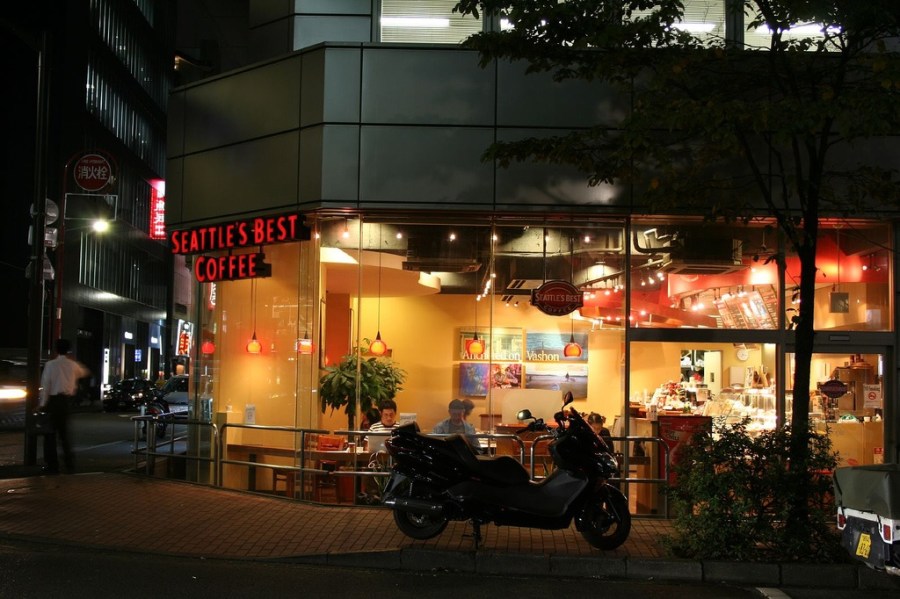
Seattle's best coffee and now in Japan?

Case 2 Gillette – The best a man can get?

When Gillette came to the UK, they briefed their agency BDO to look at, and work with, this strapline. BDO rightly pointed out that this was unprovable and as such, couldn’t be used in UK advertising. Gillette challenged this in court and the decision was that they were not claiming they were better than anyone else so therefore, anyone else could also be best too.

It was in effect, top parity. By being at the top themselves, they didn’t have exclusive ownership of that top slot and could share it with others. They have used it ever since in ads that I find continually irritating and tired. I also make a point of not using their products.

This ad from 1989 shows their thinking when they came to the UK with the first use of this strapline. For me, it shows how far we have moved in terms of advertising techniques and what worked then. It is awful, patronising and again, completely implausible. When did you last see an ad this cheesy?

Their brand tags show how effective its been for them however as you can see here

Case 3 – Elf (2003)

When Buddy (Will Ferrell) is wandering around New York, he sees a sign outside a crappy coffee shop and runs in to congratulate them. Later on in the film he takes his new girlfriend Jovie (Zooey Deschanel) for a treat at the home of the world’s best coffee. She is slightly unimpressed – again because it is so implausible.

Case 4 – BB Muffins Nottingham

I saw this today and laughed. If claiming to offer the best coffee in Seattle is a big claim, this one is plain stupid.
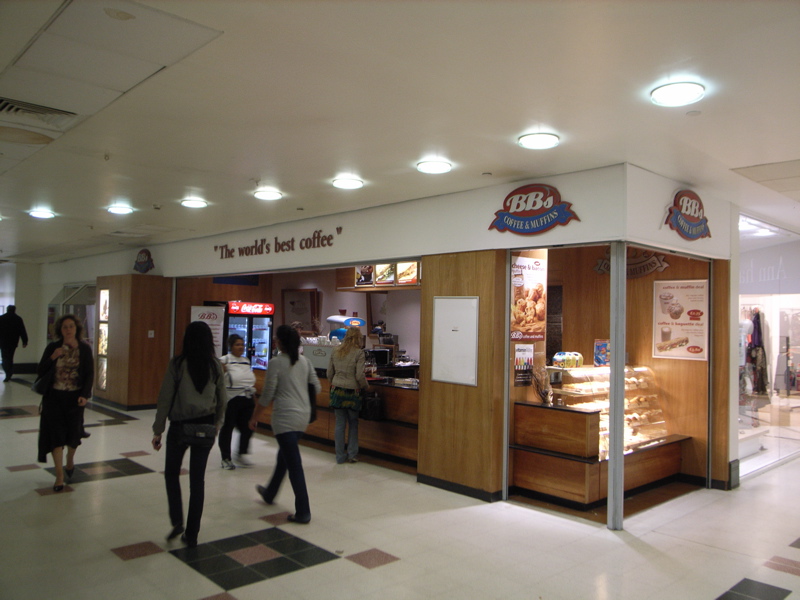
BB Muffins the home of the world's best coffee - and by law, their coffee is only actually as good as anyone elses!

It’s a bun shop that sells coffee on the side. For them to make a claim as the ‘world’s best’ is 100% ludicrous. I’ve never eaten or drank there, so I can’t vouch for their work, but it’s about as plausible a ‘world’s best’ as the one in Elf.

Case 5. Tina Turner – Simply the best

Hmm, not for me, but as we were talking about this in the office, they dared me to add this to the list, so I did. Enjoy it as it’s from her live tour in 1990 and she’s put on some years since then. Does the word ‘simply’ at the start help with her differentiation?

Summary.

Anyone can claim they offer the ‘world’s best’ as it isn’t a point of difference, it’s just a point of top parity.

To make this claim and deliver a product that is less than world class, will (hopefully) kill your brand forever.

Any brand has to have a clear and demonstrable point of difference, or people will not understand what they are about and what they should feel by having a ‘brand’ relationship with them.

‘Best’ isn’t good enough and ‘better’ normally isn’t provable, so where does that leave all these?

Who else can we add to the list of fame/shame as making brilliant/ridiculous claims to be the best?

Show me the videos or stills and I’ll happily link them off here. Have fun.

Thanks for the Seattle’s best shot to Cloganese. You can see more of his fine work here

Brave, very brave – Dixons gets honest

The new and rather honest ads by Dixons

This is some very brave advertising by Dixons and you can see the copywriter has had great fun in constructing it. Its beautifully written, there’s no doubt about that, but is it good for the long term health of the Dixons brand?

For me, ever since Dixons profits showed that they made more money selling warranties that we didn’t need than they did from the products themselves, they showed their true colours as sales charlatans. Their brad values were short term opportunistic profits. They became the brand that people loved to hate. John Lewis, with their sensible people offering sensible prices in sensible locations became the choice of sensible people and they filed that void left behind by the Dixons customers who deserted them. They became a better than viable alternative.

But just recently, I’ve started falling out of love with John Lewis. I don’t believe their people are that nice. I don’t actually believe they are never knowingly undersold as I can always find cheaper (they don’t want or allow you to compare their prices with online prices you see!) and I began to doubt the value of their brand promise when I (over)heard people being knocked back when they were trying to return things a few days out of warranty.

So after I’ve walked through the hallowed halls of John Lewis, played with their docking stations, left funny messages on the screens of their laptops, logged them into things they shouldn’t be and and had their sensible staff come along and offer to help me, will I go to Dixons last?

No. Actually I won’t. I’ll go home and buy it online from Amazon, or another online retailer where I know where I stand, I know where and when it will be delivered and where I know that, at the moment at least, I’m a valued customer.

Good try Dixons, but I still think you’re too shady to get my custom in the near future. Keep this up though and I’ll certainly come back into store to look.

Updated

Another brilliant written and crafted ad from Dixons. I’m starting to think they actually deserve some success in what they are doing as they have captured most of our thoughts and more importantly, our actions, pretty damn well.

Another brave ad from Dixons capturing the spirit of what we're actually doing!

The creative answer to start-up’s problems

A little while ago, I wrote a piece about the fight that Margate and Derby were facing in attracting new retailers when they are committed to charging business rates based on the rateable value. I proposed that the councils have to be flexible and offer rent and rates free periods to attract younger start ups in, without the fear of long lease commitments – which would put the mockers on most retail start-ups in any trading times, let alone difficult trading times.

And it seems that the answer has happened right on my doorstep, with the arrival of Wayne Hemingway’s Kioskiosk Project. This project allows start-ups free use of a funky retail space within the city to see what works for them, see whether they like it and to see whether they can make money at it – without much downside risk.

Embarrassingly, I was actually invited (and had accepted) the invitation to the opening of this in Pelham Street, Nottingham, but forgot. That’s pretty bad planning on my part and appallingly rude. Sorry Wayne and sorry Nina of Invest in Nottingham who invited me.

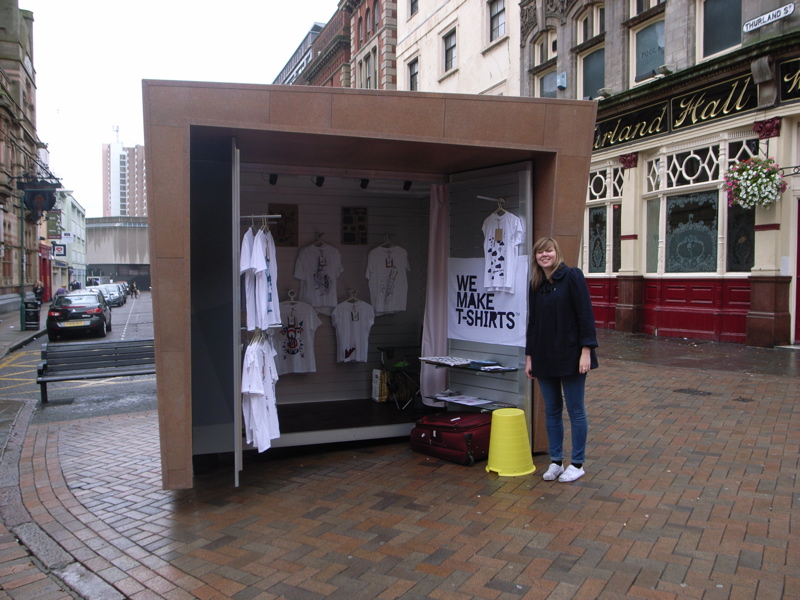
So I went along today to see what it was all about and the star of the show today is a young designer called Gill Heeley, who actually did a placement with us a few years ago at Purple Circle. This is her at the Kiosk.

Gill Heeley of We Make T-Shirts with their three days of fame at Kioskiosk in Pelham Street Nottingham

I asked her to look proud for the shot and I think that works! It’s also my first published shot with my new Ricoh GR camera that I bought after realising that many of the shots I got in the US were rubbish.

Gill, whilst studying graphic design at Nottingham Trent, started making T-shirts for fun and then teamed up with two friends – Tony Waddington and Mike Knight – from college to try it out as a business.

They now run a business called We Make T-shirts and you can look at their website here.

They’ve got some lovely shirts with great detailing and already look to have some good orders behind them for other independents. This independent sector is what allows any city to differentiate themselves and Kioskiosk, delivers a trial independence beautifully.

There is no way Gill and her partners would take out a lease. There is no way that any bank would lend them the cash to start up without a proven track record. But Kioskiosk gives them the chance to have a look.

Talking to Gill, she was under no illusions about how hard starting and running your own business can be, so she’s being realistic – and maybe this chance is just what her and her partners need to get started on their way to a great business.

Good luck to them and thanks for giving them the opportunity Mr Hemingway. Oh, and Nottingham City Council for giving them the space.

The future of branding is unbranded – ask Starbucks

CJ as a young corporate customer on his laptop in Starbucks

In an article I wrote recently about place branding, I proposed that the future of branding is unbranded. You can read that here.

What I was arguing against was homogenisation. Standardisation being used as a byword for branding, that decreases rather than increases consumer choice.

And it would appear that Starbucks, in the US at least would agree with this sentiment. In a great article by Tim Haywards in the UK’s Guardian newspaper he savages them for drifting from Happy hippiedom to the same tired old corporate suit as everyone else on the homogenised high street.

For any brand to be able to survive, it has to evolve or it will die. Like dinosaurs did when they failed to build protection against meteorite strikes. Today’s meteorite strikes are coming from the upstart brands and from locally differentiated, welcoming outlets.

In Seattle, there is already a company calling themselves Seattle’s Best and who’s to say it isn’t? (my cup I had in a plane on the way to Seattle was absolutely horrid – see here) But that doesn’t mean its the most loved, by any stretch of the imagination.

With any brand the product is critical, but so is the tribe in which consuming it puts you. You have to feel good about it. You have to bask in its reflected glorious ‘brandness’ and you have to want to tell your cool friends about it.

I think this is a great move for Starbucks.

I hope they have the nerve to debrand their estate, to give their customers the chance to fall in love with them all over again.

I hope they have the nerve to allow their local people to interpret their offer locally and create cool places for their customers to hang out. If that means they want to appeal to corporate wannabe’s then that’s fine, but design your offer accordingly. If that means they want their hippies back, then that’s just as fine – again, design accordingly.

The future of branding maybe isn’t unbranded, but it has to listen to its customers needs and be flexible as hell in delivering what they want or it will go the way of the dinosaurs.

Thanks to Jayne Wilson for the use of the picture of CJ on a Laptop in Starbucks. You can see more of her fine work here.

Holiday Inn have rebranded and we can all learn from this

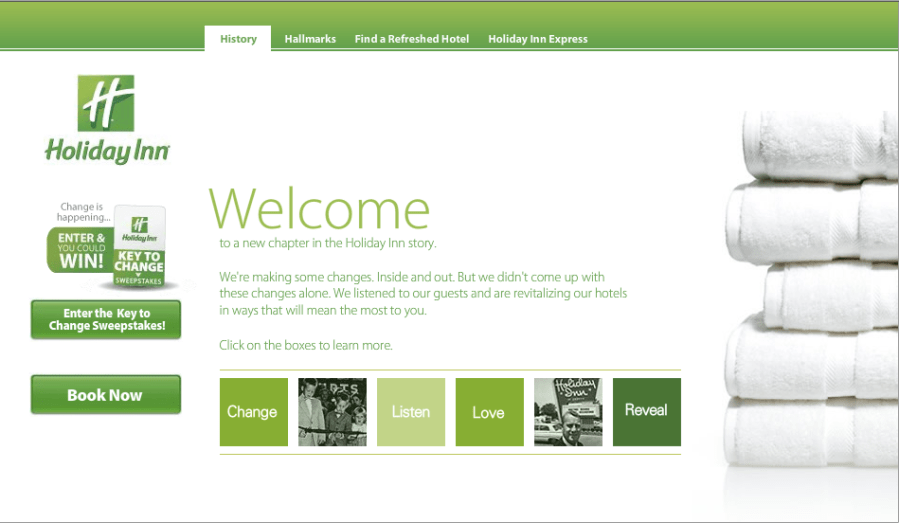
Holiday Inn rebrand - A rebrand borne out of listening to customers
Holiday Inn rebrand – A rebrand borne out of listening to customers

In our role, we see an awful lot of rebrands and we see a lot of awful rebrands.

But not so the rebrand of Holiday Inn, which in my opinion is spectacularly good. It should be for $1billion though.

I’m not impressed because they have created a swish new logo, because the one they have created is only fine. It’s certainly not groundbreaking, particularly different or revolutionary, it’s just fine.

What they have done brilliantly however is redesign the branded experience by listening to their customers.

You can see the story here

Holiday Inn rebrand

In their own (nicely crafted) words, they ‘Had a serious heart to heart with their guests – it was the biggest global dialogue that has ever happened in their category’

They are aiming to remind past present and lapsed customers, why they fell in love with them in the first place. Love is a great word in branding and its talked about a lot, but very rarely achieved. Only the real greats ever reach this status and we see them all over in Apple, Harley, Virgin, Sony and the other ‘Lovemarks’ brands.

They’ve taken control of the welcome, introduced (or reintroduced) friendly and efficient check in and even their signature sound and scent.

Wow.

How many brands control their sound and scent?

I stayed in the Holiday Inn, in Back Bay, Boston and the staff were already superb. It was the friendliest hotel we stayed in during our whistlestop US tour but I’ve yet to stay in one of the refreshed ones.

If they can deliver worldwide on this very bold and public promise, that will be one of the most truly outstatnding rebrands ever seen.

Updated

In this really interesting piece on the Wall Street Journal it would appear that Holiday Inn are again doing the right thing by enforcing the switch of their brand from old to new. If you don’t update to their new standards by the end of 2010 they will dump you.

This is where most rebrands or brand implementations fall over. It’s nearly always bad implementation or a lack of implementation altogether. There is clearly a major cost implication for the Holiday Inn franchisees of $150-250k and some will not be able to justify the expense. This will effectively get rid of up to 300 existing operators who will then be ‘debranded’ altogether.

This may be a bit of a rough way to treat your business partners, but it’s vital to remember that one single bad brand interaction can undermine the whole branded experience. By getting rid of these 300 or so, they will reduce the average age of their hotel stock by 11 years to only 15 years old. This is a major percentage change and one that will ensure a more consistent branded experience across the world.

I was impressed before and as I’m not one of those 300 operators under threat, i’m still impressed. I wonder how this will play out in the long term?